
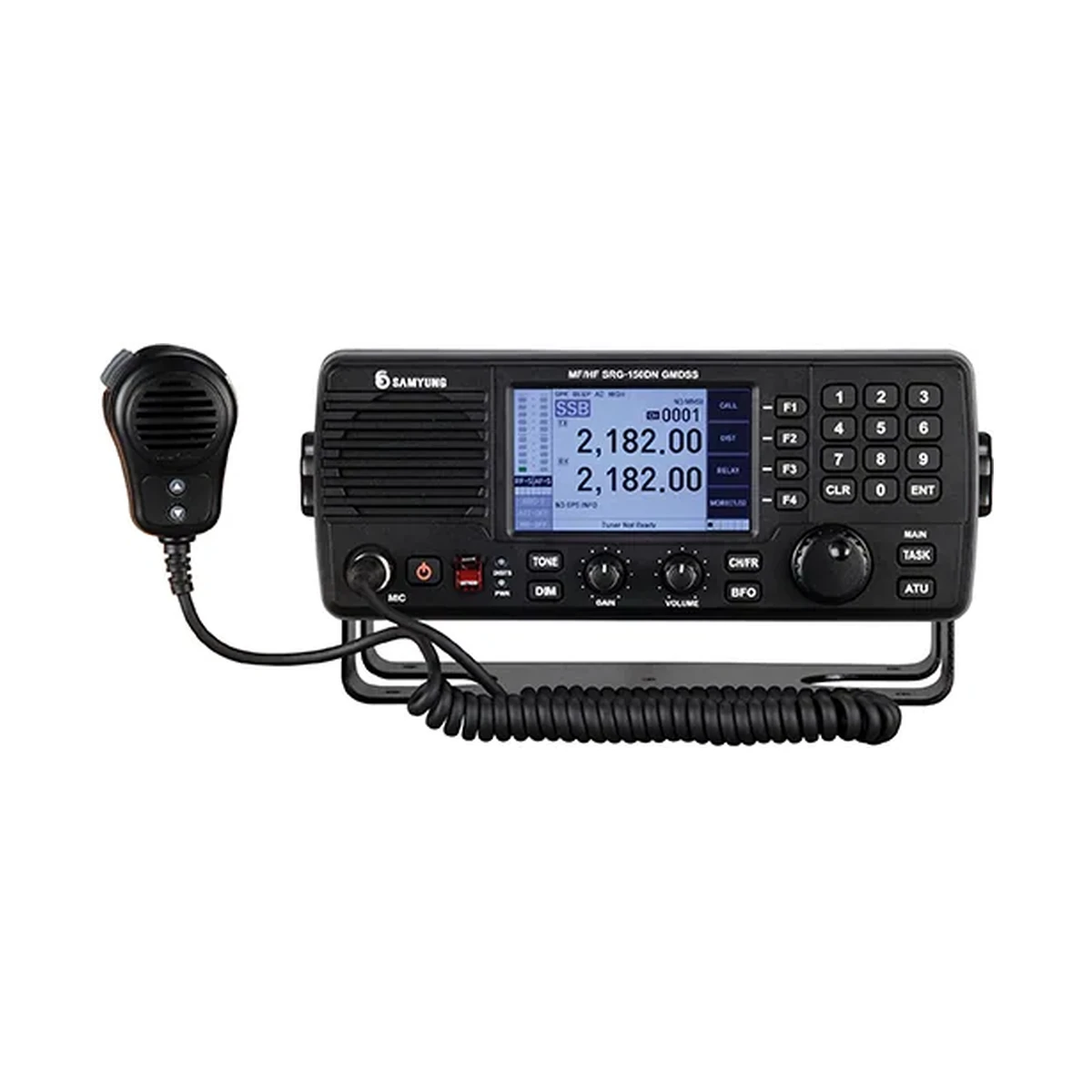
Why MF/HF is a different tier of equipment
VHF DSC, covered elsewhere in this series, handles Sea Area A1, coastal coverage within range of shore VHF stations. Once a vessel operates beyond that range, MF and HF radio take over, and the equipment involved, exemplified by the Samyung SRG-150DN, a 150 W MF/HF GMDSS radio covering 1.6 to 27.5 MHz, is built to do considerably more than the voice communication MF/HF radio is often associated with.
DSC on MF/HF
Integrated Digital Selective Calling on an MF/HF set works on the same underlying principle covered in the dedicated DSC class article elsewhere in this series, automated distress, urgency and safety alerting, but operating on MF and HF frequencies rather than VHF, extending that alerting capability out to the hundreds or thousands of nautical miles MF and HF propagation can cover depending on frequency, time of day and atmospheric conditions. This is what closes the alerting gap for Sea Area A2 and beyond, where VHF DSC alone cannot reach a shore station.
NBDP telex: text over radio
Narrow-Band Direct-Printing telex, NBDP, is a text messaging mode integrated into MF/HF GMDSS radios such as the SRG-150DN, allowing written messages to be sent and received over MF or HF frequencies without requiring a satellite terminal. This matters for exactly the situations where voice communication is unreliable or impractical, poor propagation conditions, language barriers with a distant station, or simply the need for a written record of a message rather than a verbal exchange that depends on both parties hearing correctly. NBDP predates satellite messaging by decades and remains part of the GMDSS framework specifically because it works independently of any satellite infrastructure.
Why 150W, specifically
Transmit power on MF/HF equipment matters directly to range and reliability, since MF and HF propagation, particularly HF's reliance on ionospheric reflection, is considerably more variable than VHF's straightforward line-of-sight behaviour. A higher-power transmission has a better chance of being received clearly at long range or under degraded propagation conditions, which is part of why GMDSS-carriage MF/HF equipment such as the SRG-150DN is specified at a substantial 150 W rather than the lower power levels adequate for VHF's much shorter, more predictable range.
How this fits the sea area framework
As covered in the dedicated sea area article elsewhere in this series, a vessel certified for Sea Area A2 needs MF DSC capability, and a vessel certified for A4 needs HF DSC and radiotelephony capable of covering the full HF range where satellite coverage does not reach. A single well-specified MF/HF GMDSS radio, covering the necessary frequency range with integrated DSC, can address both requirements within one piece of equipment rather than requiring entirely separate MF and HF installations.
What to confirm before specifying MF/HF equipment
- Frequency coverage against the vessel's actual certified sea area requirement, confirming MF, HF or both are needed.
- DSC class, Class A being the SOLAS-compliant requirement, as covered in the dedicated DSC article elsewhere in this series.
- Whether NBDP telex capability is required by the vessel's specific carriage requirement or is being specified as a genuinely useful additional capability beyond the strict minimum.
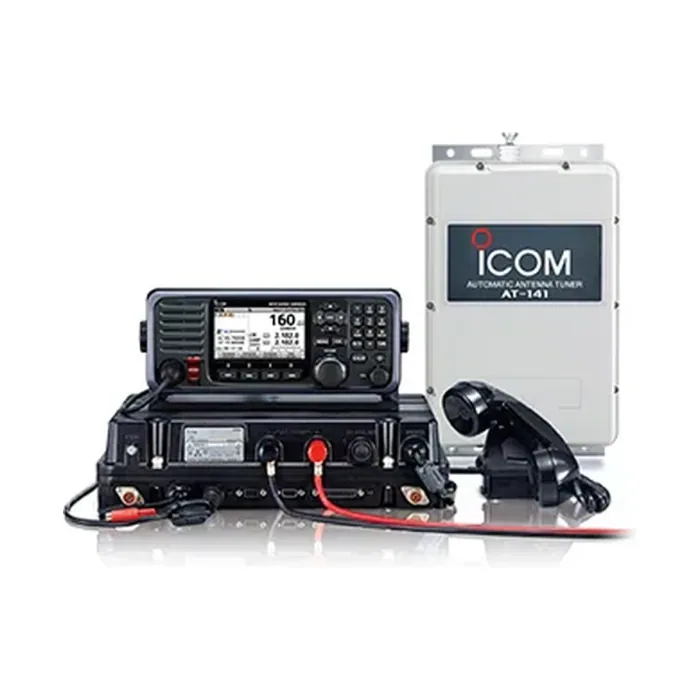
- Antenna and tuner requirements, since MF/HF performance depends heavily on a properly matched antenna system, more so than VHF does.
ASPL supplies MF/HF GMDSS radios meeting SOLAS carriage requirements for commercial vessels operating in Sea Areas A2 through A4, and handles the antenna tuning and commissioning that MF/HF performance depends on.