
IcomReceivers
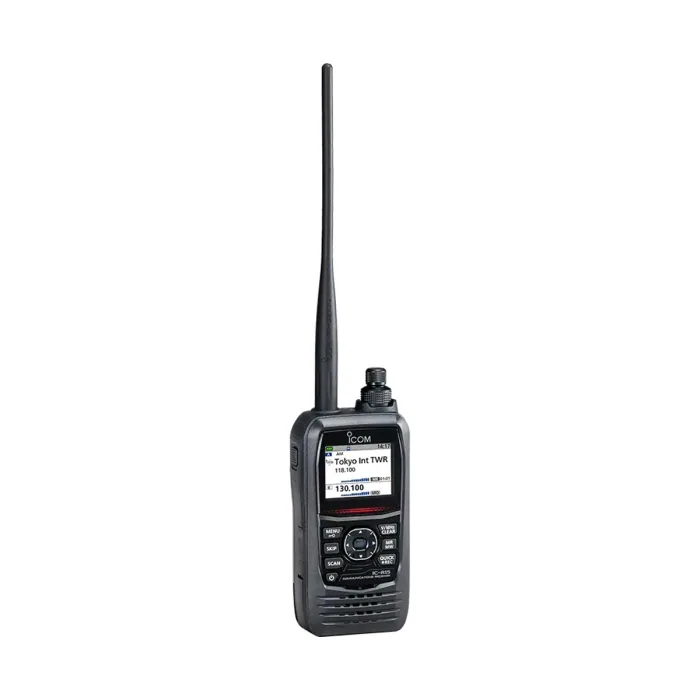
IC-R15
A dual-watch wideband receiver covering 108-500 MHz plus broadcast band in AM/FM/WFM, with 2000+ memory channels and USB charging.
Enquire →
One stop shop for complete navigation & communication solutions.
Catalogue
Wideband communications receivers for monitoring and spectrum work.
See also Amateur Radio.
Catalogue
Receivers · Showing 3 of 3 products
A dual-watch wideband receiver covering 108-500 MHz plus broadcast band in AM/FM/WFM, with 2000+ memory channels and USB charging.
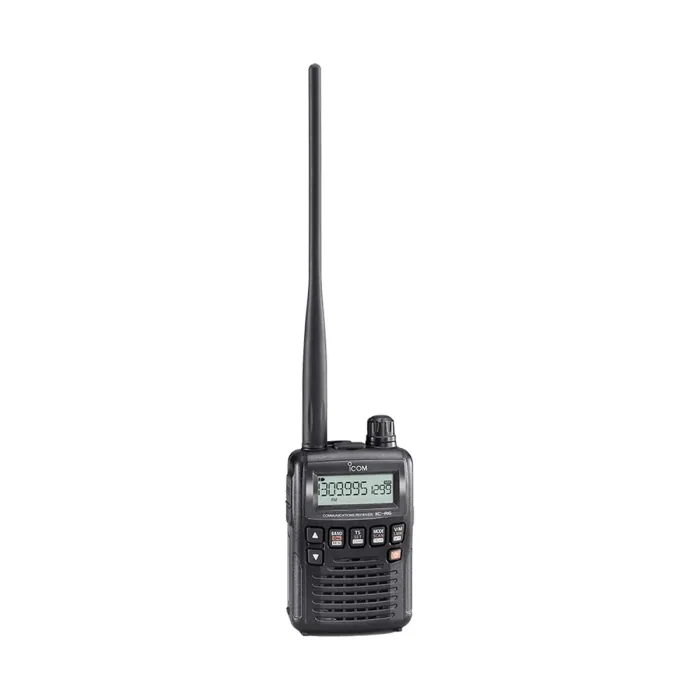
A wideband handheld receiver covering 0.1-1309.995 MHz in AM/FM/WFM with 1550 memory channels, running on two AA cells.
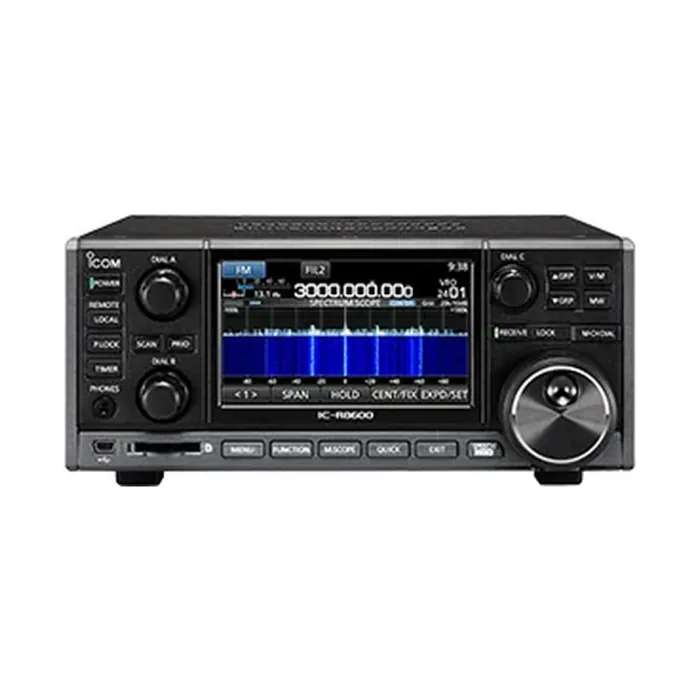
Icom IC-R8600 wideband communications receiver covering 10kHz to 3GHz with USB/LSB/CW/AM/FM/WFM and multi-mode digital demodulation.
Wideband communications receivers for monitoring, spectrum work and surveillance applications, supplied to government agencies and professional users across India.
A wideband communications receiver is a radio that listens across a broad span of frequencies, typically from the low HF or VHF range up through UHF, without transmitting anything itself. It's used to monitor marine, aviation, amateur radio and public-safety traffic, alongside broadcast bands, giving hobbyists, security personnel and operations staff a single set that can follow activity across many services rather than one dedicated band. Because it only receives, it fills a different role from a marine VHF set or an aviation transceiver: situational awareness and monitoring rather than two-way communication.
The receiver's front end and synthesizer tune continuously across its rated range, commonly spanning well under 1 MHz up past 1 GHz depending on the model, and it demodulates whatever mode the signal on that frequency uses: AM for aviation and some broadcast traffic, narrow FM for marine, amateur and public-safety channels, and wideband FM for commercial broadcast stations. Frequencies of interest are stored in memory channels or banks so the operator can scan through them automatically instead of tuning manually, and some models add a second independent receiver section so two frequencies, or two bands, can be monitored at the same time.
For base or mobile use, a wideband antenna matched to the frequency range you actually monitor makes the biggest difference to reception, since a single compromise antenna will always favour some bands over others; a discone or similar wideband design is the common choice when covering VHF and UHF together. Mount it as high and clear of obstructions as practical, the same principle that governs any VHF/UHF reception, and keep the feedline run short with a good-quality coaxial cable to avoid losing signal before it reaches the receiver. Once the antenna is in place, the other setup task is programming: loading the frequencies and modes you care about into memory channels or banks, grouped by service (marine, airband, amateur, and so on), so the receiver can scan them automatically instead of being tuned by hand every time.
This isn't settled by a simple rule of thumb. The Indian Wireless Telegraphy Act, 1933 regulates possession of wireless apparatus generally, and receive-only equipment hasn't always been treated the same as it is in some other countries. Requirements can depend on the specific equipment and intended use, so we recommend checking directly with the WPC Wing of the Department of Telecommunications before you import, possess or operate one, rather than assuming a receive-only set is automatically exempt.
No. These are receive-only devices with no transmitter section, so they cannot broadcast or communicate back on any frequency, only listen. That's a fundamental hardware difference from a transceiver such as a marine VHF or handheld aviation radio, which can both send and receive.
A marine or aviation transceiver is built and licensed to transmit on its specific service band as well as receive it. A wideband communications receiver covers many bands at once, including marine, aviation, amateur and others, but only ever receives, which makes it useful for monitoring across services rather than communicating on any one of them.
This site uses only the cookies required for it to run, nothing for tracking or advertising. See our privacy policy.