
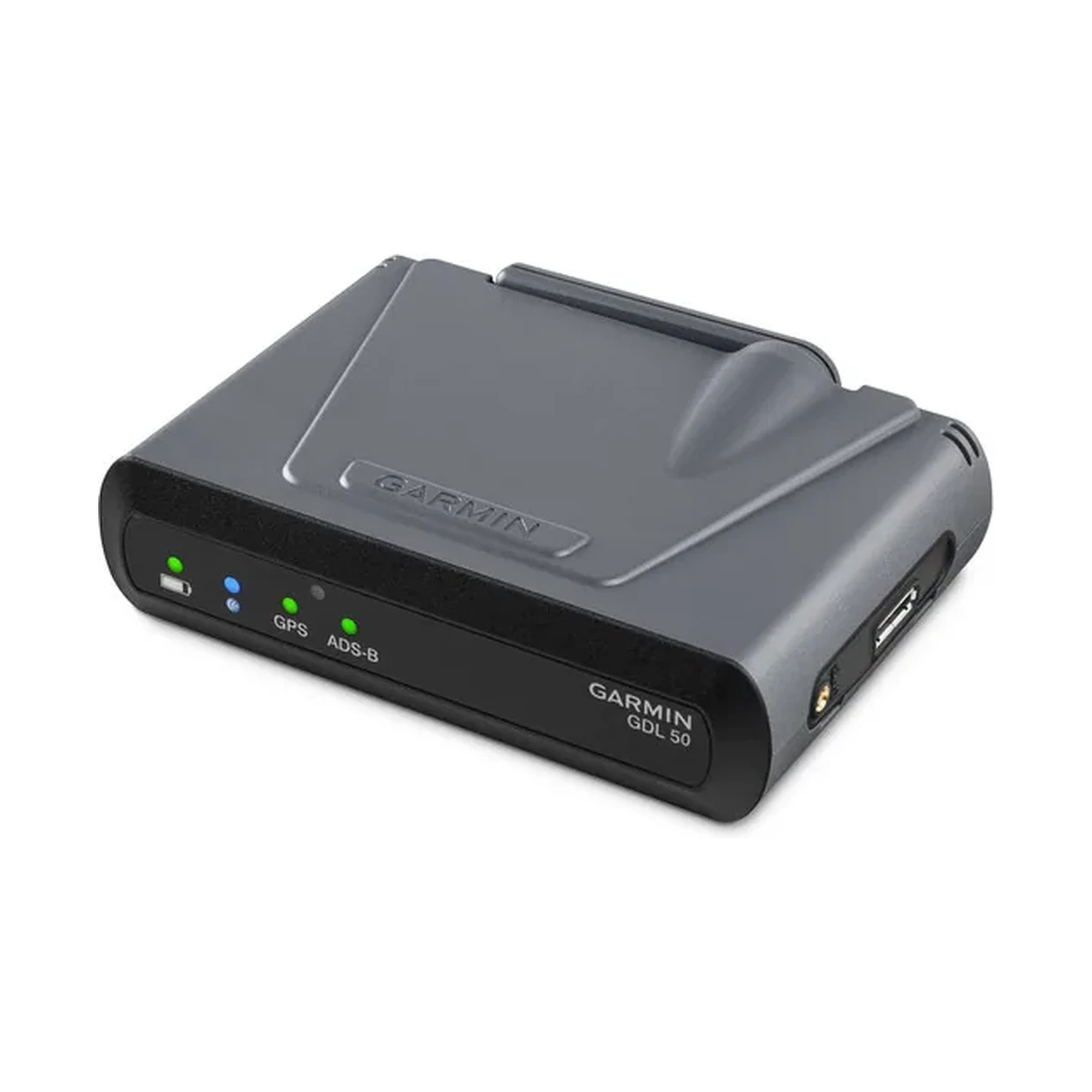
The Garmin GDL 50 is a portable, battery-powered ADS-B In receiver that pairs wirelessly with Garmin Pilot, ForeFlight, FltPlan Go and Garmin's own portable navigators to add dual-band ADS-B traffic and datalink weather to the cockpit picture. Its marketing describes subscription-free animated weather via ADS-B In, and that claim is entirely accurate, for pilots flying in the United States. Understanding why it needs that qualification, and what still works outside it, is the difference between buying the unit for the right reason and being disappointed by it.
Two separate services, one receiver
ADS-B In on the GDL 50 actually covers two distinct data streams. The first is traffic: the unit listens on both 1090 MHz and 978 MHz for ADS-B Out broadcasts from other aircraft, and any aircraft transmitting ADS-B Out on either frequency, anywhere in the world, is a target the GDL 50 can display, subject to line of sight and range. Garmin's TargetTrend and TerminalTraffic features process that traffic data to make it more intuitive to interpret near an airport.
The second stream is weather, delivered through the Flight Information Service-Broadcast, FIS-B, which is a ground infrastructure service operated across the United States by the FAA. FIS-B ground stations continuously broadcast weather products, NEXRAD radar, METARs, TAFs, winds aloft and more, on the 978 MHz UAT frequency, and any receiver within range of a station picks it up for free, with no subscription or per-flight cost. This is the origin of the "subscription-free" claim, and it is genuine within FIS-B's coverage.
Why weather does not travel with the receiver
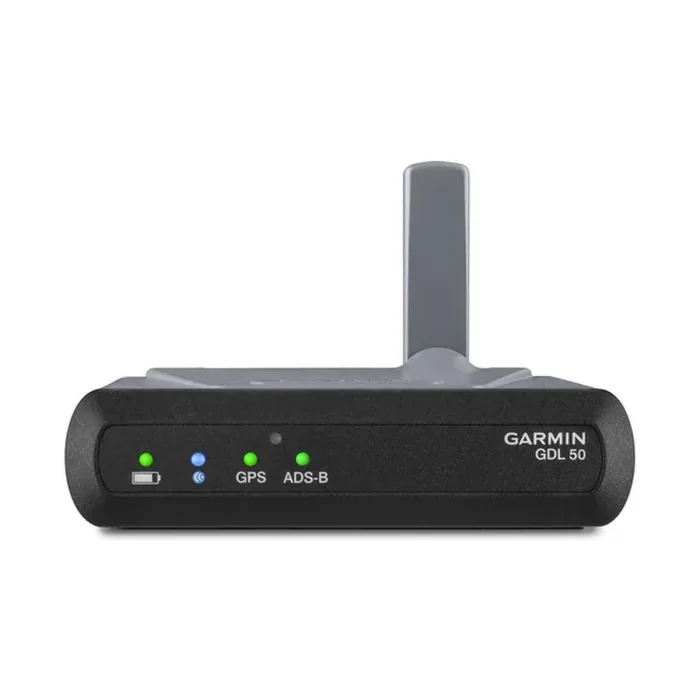
FIS-B is ground infrastructure, not a satellite service and not something the aircraft or the receiver generates. Outside the United States' network of FIS-B ground stations, there is nothing broadcasting on 978 MHz for the GDL 50 to receive, regardless of how capable the receiver itself is. A GDL 50 flown in Indian airspace will not receive FIS-B weather, because India has no equivalent ground network broadcasting that specific service. This is not a limitation of the hardware; it is the absence of the infrastructure the hardware is built to listen to.
What does work in India
Traffic reception is not tied to any single country's ground network in the same way, because it depends on other aircraft transmitting ADS-B Out, not on a ground station broadcasting to you. A GDL 50 flying in Indian airspace will show any nearby aircraft that is itself transmitting ADS-B Out on 1090 MHz or 978 MHz, which in India's case is most relevant to aircraft complying with the DGCA's FL290-and-above 1090ES mandate, plus any other aircraft voluntarily equipped. The GDL 50 also includes its own internal WAAS/SBAS GPS position source, which functions anywhere SBAS coverage exists, including under GAGAN over Indian airspace, so it can serve as a GPS position source to a paired app or navigator independent of any datalink service at all.
Buying it for the right reason
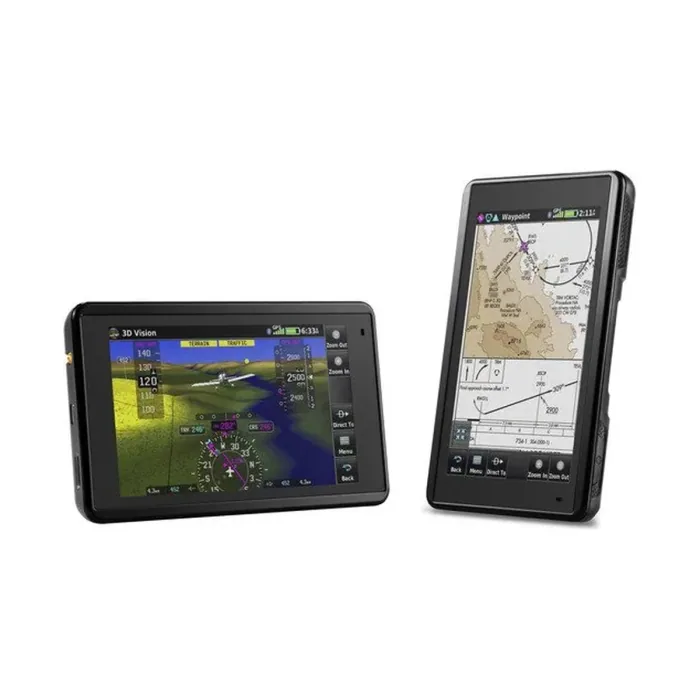
For an Indian operator, the honest case for the GDL 50 rests on ADS-B In traffic display and its GPS/AHRS capability feeding a paired EFB or portable navigator, not on the free weather that is the unit's headline feature in US marketing. It is worth owning for that traffic picture alone in busy terminal airspace, and it remains a capable backup GPS source, but an operator buying it specifically expecting datalink weather in India should reconsider that expectation before purchase.
ASPL supplies the GDL 50 and the Garmin portable GPS and avionics range it pairs with, and can advise on which of its capabilities are relevant to a specific Indian operation before you buy.