
Why carry a backup radio at all
A panel-mount communication radio is generally reliable, but it depends on the aircraft's electrical system, its own internal electronics, and correct wiring, any of which can fail. A handheld VHF air band radio carried as a backup removes that single point of failure entirely, since it runs from its own battery and needs nothing from the aircraft to transmit and receive. For the modest cost and negligible weight of carrying one, it converts a genuinely disruptive in-flight failure into a manageable inconvenience.
What to look for in a backup radio
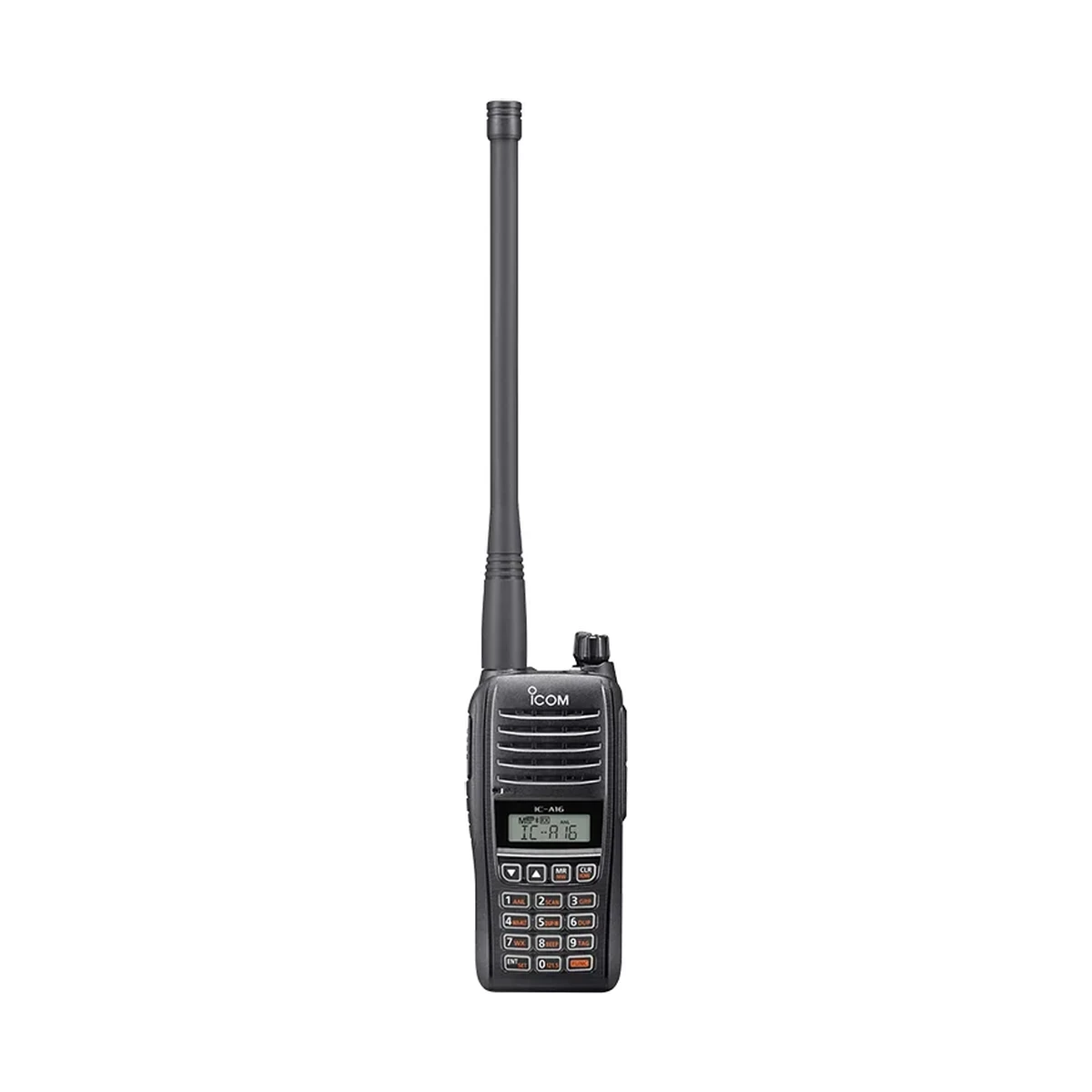
The role a backup radio plays is different from a primary installed radio, and the specification priorities follow from that. Battery life matters more than almost anything else, since the radio needs to still have charge on the day it is actually needed, which may be long after the last time it was used. The IC-A16 is rated for roughly 17 hours on its large-capacity battery pack, a comfortable margin for the kind of infrequent, unpredictable use a backup radio actually sees. Audio output matters too, since a backup radio is often used in a noisy cockpit with a passive or failed intercom; the IC-A16's 1500 mW internal audio output is specifically called out as providing clear communications for exactly this reason.
Weather channel reception
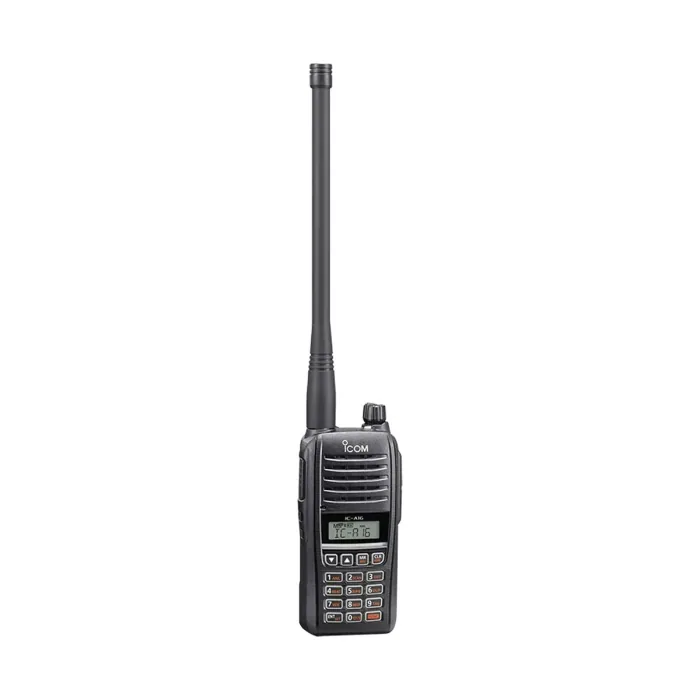
Both the IC-A16 and the IC-A25 series receive a dedicated weather channel band, 161.650 to 163.275 MHz. This range corresponds to the NOAA weather radio broadcast band used across North America; whether equivalent broadcasts exist on this range in Indian airspace should not be assumed, and this feature is worth confirming against locally available services rather than treated as a given benefit for Indian operations, in the same way the ADS-B In weather datalink coverage in this catalogue's other guides is US-specific rather than universal.
Memory channels and how you will actually use it
The IC-A16 offers 200 memory channels; the IC-A25 series offers 300 across 15 groups. For a backup radio used occasionally, pre-programming the handful of frequencies genuinely relevant to your regular flying, home airport, common destinations, relevant approach and tower frequencies, matters more in practice than the maximum channel count, since a backup radio fumbled through manual frequency entry mid-emergency defeats much of its purpose.
Deciding between a communication-only and navigation-capable handheld
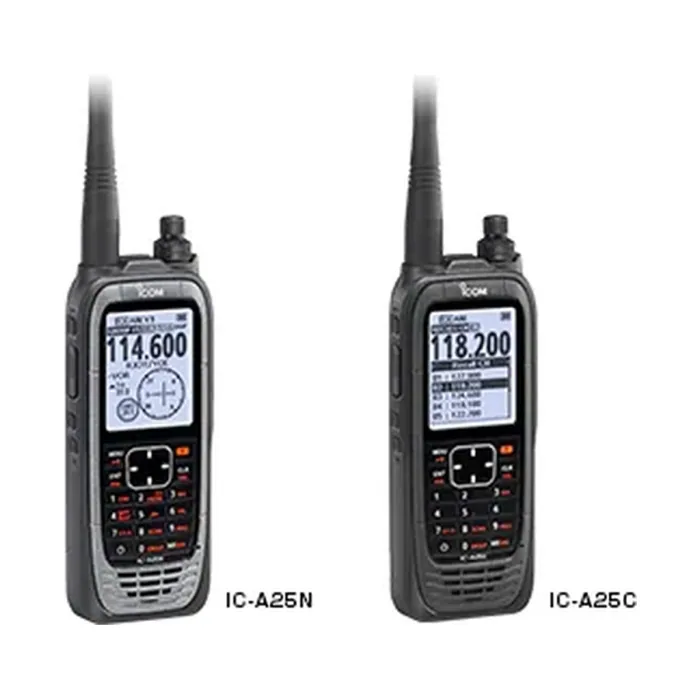
If the backup radio's only job is communication in the event the panel radio fails, the IC-A16 or the IC-A25C cover that role fully. If you also want the handheld to provide some GPS-based navigation backup, the IC-A25N adds that capability at the cost of a heavier, larger unit, covered in more detail in the IC-A25N versus IC-A25C comparison elsewhere in this series.
Keeping it actually flight-ready
- Charge the battery on a fixed schedule rather than assuming it holds charge indefinitely; lithium battery packs self-discharge over weeks and months even unused.
- Pre-program the frequencies you would actually need in an emergency, rather than relying on manual entry under pressure.
- Store it somewhere genuinely reachable in flight, not in a bag stowed out of arm's reach, since a backup radio that cannot be retrieved quickly loses much of its value.
- Test it periodically, not just on the day it is needed, confirming it powers on, holds a charge and transmits clearly.
- Carry the correct headset adapter or plan to use the radio's internal speaker and microphone if your primary headset does not connect to it directly.
ASPL supplies the full Icom handheld range for exactly this kind of backup role, and can help choose and set up a unit matched to your specific aircraft and flying.