
The problem channel spacing solves
The VHF air band, 118 to 137 MHz, is a finite resource, and as air traffic and the number of frequencies needed for airports, approach control, towers and en route sectors grew, particularly across busy European airspace, the original 25 kHz channel spacing standard from the 1970s ran out of room. Rather than expanding the band itself, the industry addressed the shortage by narrowing the channel spacing, allowing more distinct frequencies to fit within the same range.
What 8.33 kHz actually does
The 8.33 kHz standard divides each existing 25 kHz channel into three, very nearly tripling the number of usable frequencies within the same VHF air band. A radio built to support 8.33 kHz spacing can tune to these narrower channels in addition to the traditional 25 kHz ones, which is why it appears as a listed capability, not an automatic feature of any VHF radio built before the standard existed.
Where the requirement actually applies
The 8.33 kHz mandate is a European development. Europe is, to date, the region that has moved to mandatory 8.33 kHz capability, and as of 1 January 2018, aircraft operating in the ICAO European region are required to carry radios capable of 8.33 kHz channel spacing. This is a regional airspace requirement, not a universal one, and equipment built for a global market carries the capability so it can operate correctly wherever it flies, including in airspace where the requirement applies, rather than because every operator everywhere is mandated to use it.
Why current Icom radios list both spacings
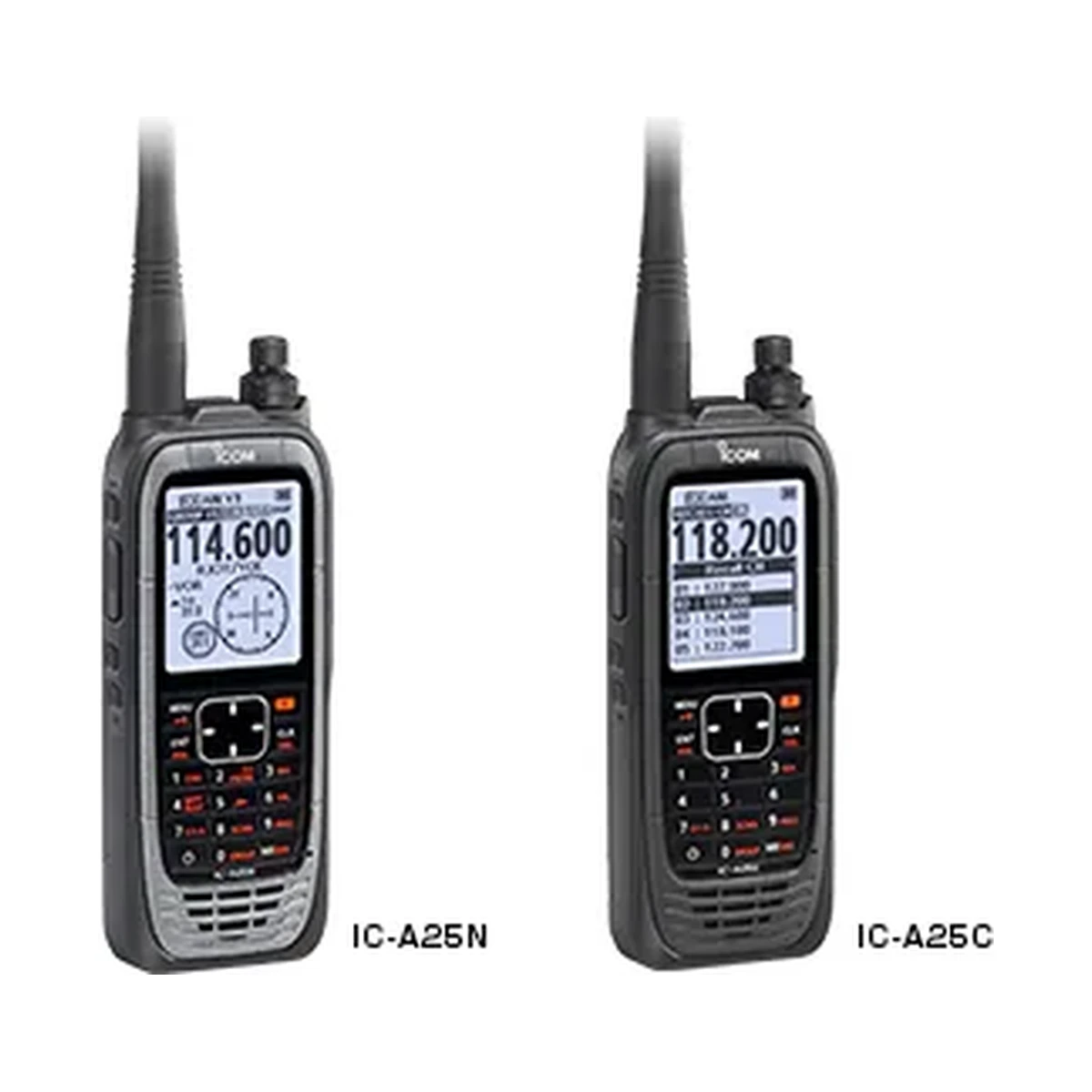
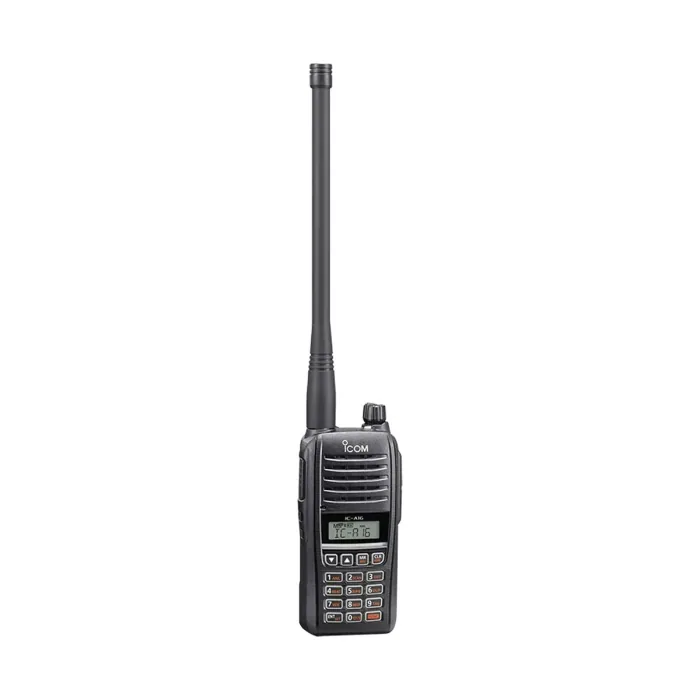
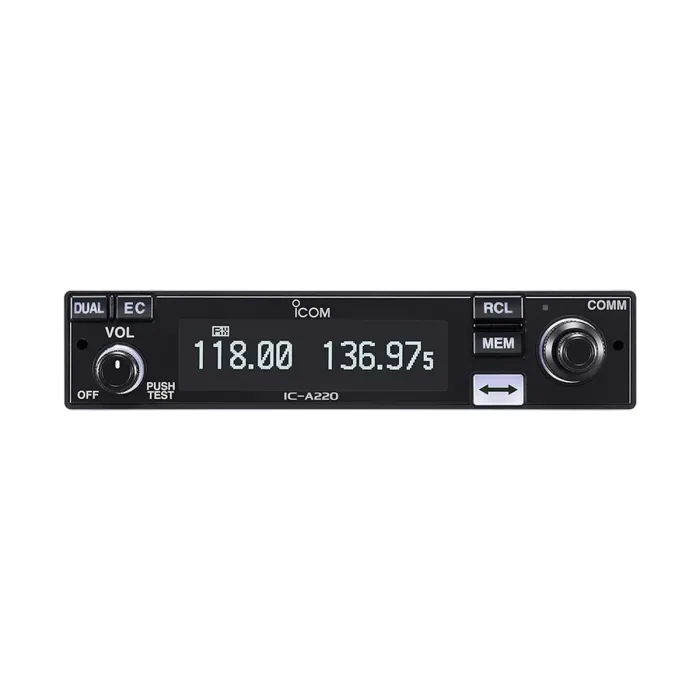
Every current handheld, panel-mount and base station VHF air band radio in Icom's range covered elsewhere in this series, the IC-A16, IC-A25N/IC-A25C, IC-A220 and IC-A120, supports both 8.33 kHz and 25 kHz spacing. This dual capability means the same radio functions correctly whether it is operating on a traditional 25 kHz channel or a narrower 8.33 kHz one, without the pilot needing to know or select which standard a given frequency uses. Practically, this future-proofs the equipment against airspace that has adopted the narrower spacing and costs nothing in capability where only 25 kHz channels remain in use.
What this means for an Indian operator
Confirm your own operation's specific channel spacing requirements against current DGCA and Airports Authority of India guidance for the airspace you actually fly in, since regulatory adoption of 8.33 kHz spacing is region-specific and this article does not assert an Indian mandate. What can be said with confidence is that buying equipment already capable of both spacings costs nothing extra in the current Icom range and removes the question entirely, whether your own airspace currently uses 25 kHz exclusively or has narrower channels in any part of its structure.
The practical takeaway
Dual-spacing capability is not a feature to actively shop for or pay a premium for; it is a baseline the current generation of aviation radios already meets. The more useful question when choosing between Icom's handheld, panel-mount and base station radios is the form factor and role each is built for, covered in more depth elsewhere in this series, since channel spacing capability is consistent across the whole range.