
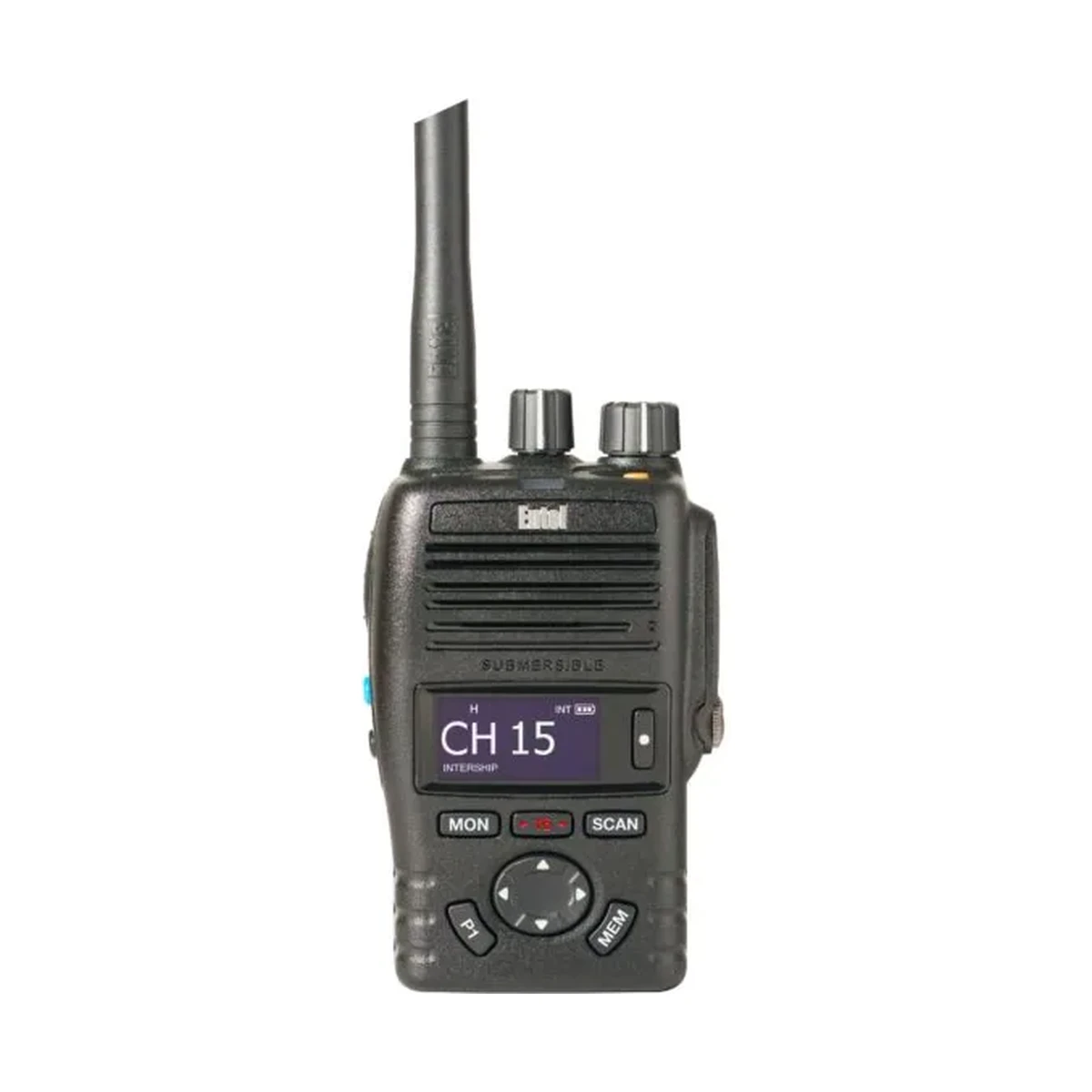
What ATIS actually does
Automatic Transmitter Identification System, ATIS, is a signalling function that automatically transmits a short digital code identifying the vessel at the end of every voice transmission on VHF, without any action required from the operator. The Entel DX644/ATIS is built specifically with this capability, alongside the standard 5 W marine VHF operation, IP68 waterproofing and a 2200 mAh battery covered elsewhere in this catalogue's marine VHF content.
Why inland waterways need it and open sea does not
ATIS is specifically a requirement of European inland waterway regulation, covering rivers and canal systems such as the Rhine and Danube, rather than a general maritime VHF requirement. The reasoning is practical: inland waterway traffic is dense, close-quarters and often lacks the AIS coverage or vessel spacing that open-water shipping relies on for identifying nearby traffic, so automatically appending vessel identity to every transmission gives other vessels and lock or bridge operators an immediate, unambiguous way to know who is transmitting, without requiring the operator to state it manually every time.
How the identification code works
An ATIS code is derived from the vessel's specific identity, generally linked to its ship station licence for inland waterway operation, and it is transmitted as a short data burst appended automatically after each voice transmission ends, inaudible as intelligible speech but decodable by equipment and shore stations monitoring for it. This means the identification happens without adding to the operator's workload or requiring any change to how the radio is actually used for voice communication.
Why a standard marine VHF does not meet this requirement
Standard marine VHF radios, including the GMDSS and general marine equipment covered extensively elsewhere in this catalogue, are built for open-water maritime use and do not include ATIS signalling, because it is not part of the international maritime VHF standard those radios are certified against. A vessel intending to operate on European inland waterways specifically needs ATIS-capable equipment such as the DX644/ATIS; a standard marine VHF, however otherwise capable, does not satisfy that specific regional carriage requirement.
Who this actually matters to
- Vessels operating on, or transiting through, European inland waterway systems specifically, where ATIS is a documented regulatory requirement.
- Delivery voyages or vessel relocations that will pass through inland waterway sections, even if the vessel's primary operation is coastal or open-water.
- Charter or commercial operators whose routes include inland European river or canal systems as part of a broader operating area.
A vessel with no plans to operate on European inland waterways has no practical need for ATIS capability, and a standard marine VHF remains the appropriate choice. ASPL supplies the Entel DX644/ATIS for operators whose routes do call for it, alongside the broader marine VHF range for vessels that do not.