

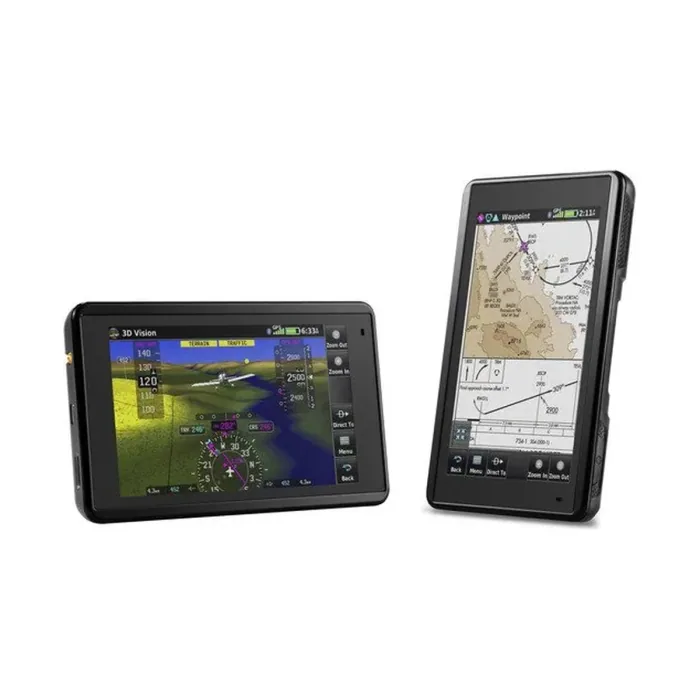
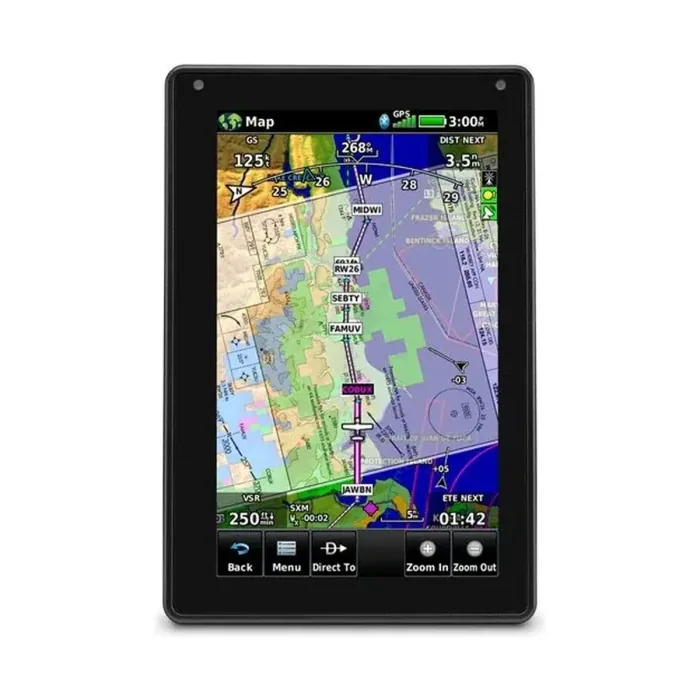
A specification line reading "SBAS/WAAS/GLONASS receiver" appears on most current portable and panel aviation GPS units, including Garmin's Aera 660 and Aera 760. WAAS, the Wide Area Augmentation System, is the American implementation of a Satellite-Based Augmentation System, and it is the name most pilots learn first. Over India, the system doing the equivalent job is called GAGAN, and understanding what it actually is clears up a fair amount of confusion about what a receiver is doing when it reports a WAAS-quality fix in Indian airspace.
GAGAN kya hai? हिंदी में संक्षिप्त उत्तर
GAGAN (GPS-Aided GEO Augmented Navigation) भारत की अपनी उपग्रह-आधारित संवर्धन प्रणाली (SBAS) है, जिसे भारतीय अंतरिक्ष अनुसंधान संगठन (ISRO) और भारतीय विमानपत्तन प्राधिकरण (AAI) ने मिलकर विकसित किया है। यह भारत और आसपास के हवाई क्षेत्र में GPS सिग्नल को सुधारती और जाँचती है, ताकि विमानों को अधिक सटीक स्थिति मिल सके। इसके लिए लगभग 15 ग्राउंड रेफ़रेंस स्टेशन, तीन अपलिंक स्टेशन, दो कंट्रोल सेंटर और तीन भूस्थिर उपग्रह काम करते हैं।
GAGAN अमेरिका के WAAS के बराबर है। अमेरिका (WAAS), यूरोप (EGNOS) और जापान (MSAS) के बाद, भारत नागरिक विमानन के लिए SBAS चलाने वाला दुनिया का चौथा देश है। कोई भी SBAS या WAAS-सक्षम GPS रिसीवर, जैसे Garmin Aera 660, Aera 760 या GLO 2, भारतीय हवाई क्षेत्र में GAGAN का उपयोग अपने-आप करता है; इसके लिए अलग "GAGAN रिसीवर" की ज़रूरत नहीं होती।
What GAGAN is
GAGAN, GPS-Aided GEO Augmented Navigation, is India's own Satellite-Based Augmentation System, developed jointly by the Indian Space Research Organisation and the Airports Authority of India. It corrects and validates the GPS signal over Indian and adjoining airspace using a network of around 15 ground reference stations, three uplink stations and two control centres, broadcasting correction data through three geostationary satellites. India was the fourth country in the world to field a civil aviation SBAS, after the United States' WAAS, Europe's EGNOS and Japan's MSAS.
What it delivers operationally
GAGAN provides non-precision approach service accurate to roughly one-tenth of a nautical mile, an RNP-0.1 level of performance, across the Indian Flight Information Region, and precision approach service at the APV-1.0 level over the Indian landmass. In practical terms, that is the same category of improvement WAAS brought to GPS approaches in the United States: a raw GPS fix, accurate to a few metres horizontally but poor vertically without augmentation, becomes accurate enough in both axes to fly vertically guided approaches at airports that publish them.
How it relates to WAAS
GAGAN, WAAS, EGNOS and MSAS are all SBAS systems built to the same underlying concept and designed to interoperate, which is precisely why a receiver's specification sheet lists "SBAS/WAAS" rather than naming every regional system separately. A GAGAN or WAAS-capable receiver does not need separate firmware or a separate mode to use whichever system covers the airspace it is currently flying through; it automatically tracks whatever SBAS satellites are visible and applies the correction data they broadcast. A Garmin unit specified as WAAS-capable and flown in Indian airspace is, in effect, using GAGAN, because that is the SBAS present over India, and the specification sheet's use of the more familiar WAAS terminology reflects Garmin's global product line rather than a claim that the American system is what is actually correcting the fix.
Why this matters when choosing equipment
The practical takeaway for an Indian operator is straightforward: any current SBAS-capable receiver, whether it is a portable unit such as the Aera 660 and Aera 760, a standalone GNSS receiver such as the GLO 2, or panel-mount avionics, will realise GAGAN's accuracy improvement automatically over Indian airspace without any configuration step specific to India. There is no separate "GAGAN receiver" to shop for as distinct from a WAAS receiver; the distinction that matters when buying is whether the unit supports SBAS at all, since older or budget GNSS chipsets built to a plain GPS specification do not.
The takeaway
GAGAN is not a niche or optional system layered on top of GPS. It is the reason a WAAS-labelled receiver flying in India reports the accuracy its specification sheet promises rather than the looser accuracy of unaugmented GPS. Every SBAS-capable unit ASPL supplies, from the portable aera navigators to the GLO 2 receiver, benefits from it without any additional setup.