
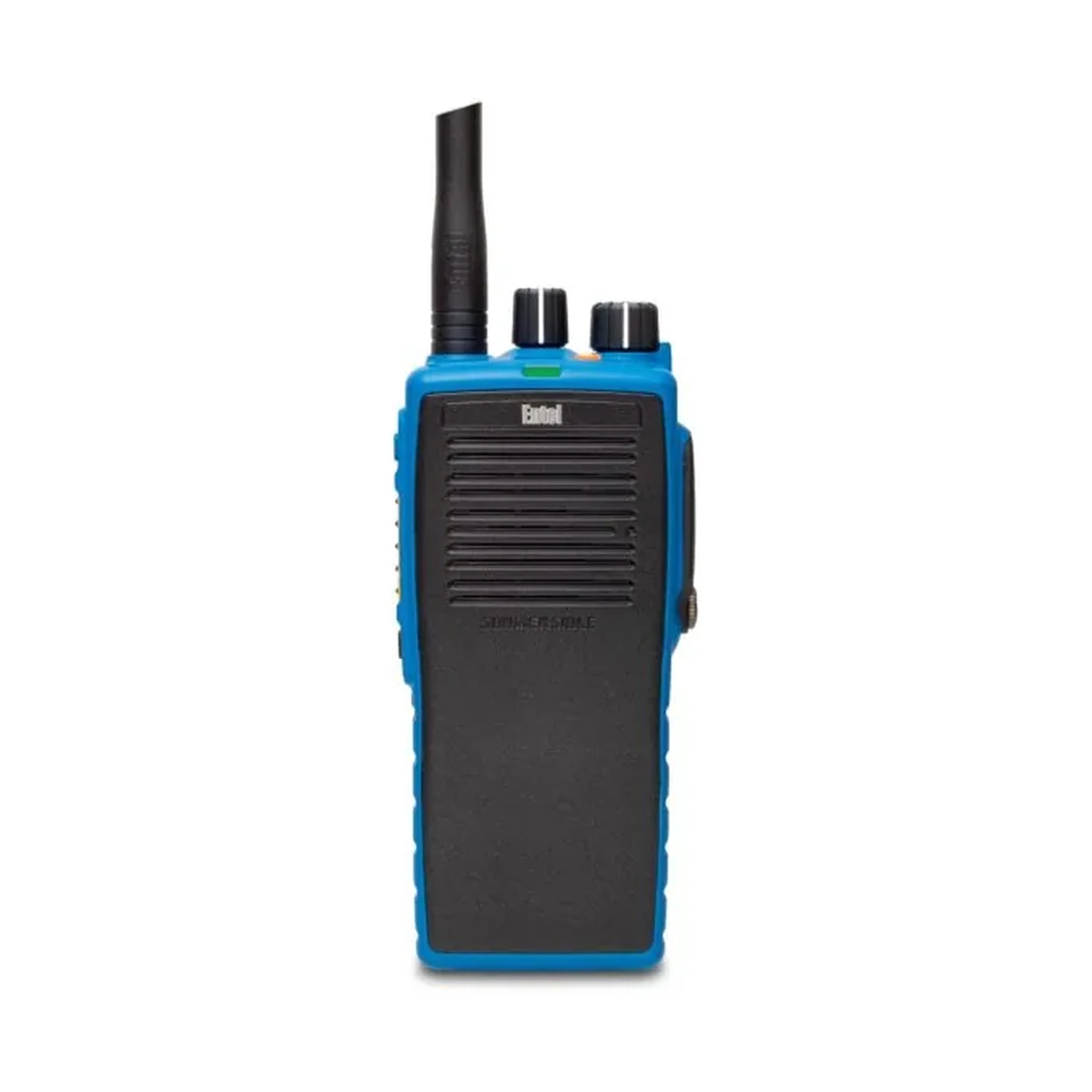
What "ATEX intrinsically safe" means, briefly
ATEX (EU directive 2014/34/EU) and its international equivalent IECEx are certification schemes for equipment used around explosive gas or dust atmospheres, and intrinsic safety, the Ex ib or Ex ia marking, is the specific protection method most handheld radios use: it limits a circuit's electrical and thermal energy to a level too low to ignite the surrounding atmosphere, even under a fault. A certified radio's marking, something like II 2G Ex ib IIC T4 Gb, states the equipment group, zone category, gas group and temperature class it's rated for, all covered in full elsewhere in this series. The short version for a buyer: the marking is a specification to match against your site's own hazardous-area classification, not a single pass/fail badge.
The layer India adds on top
An ATEX or IECEx marking is necessary but not sufficient in India: PESO, the Petroleum and Explosives Safety Organisation, runs a separate national approval process for hazardous-area equipment, layered on top of whatever international certification the radio already holds, covered in more depth elsewhere in this series. Budget for PESO approval as part of the procurement timeline, not as a final step handled after equipment has already been ordered.
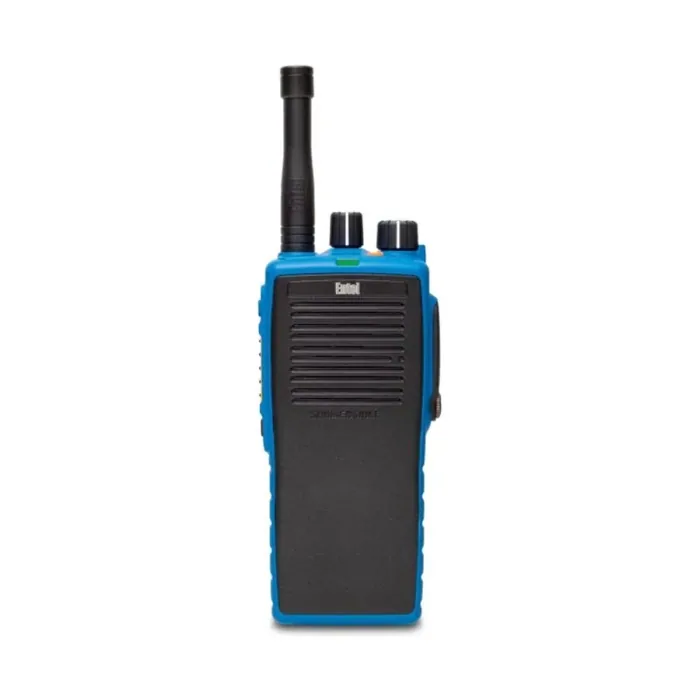
What ASPL actually supplies
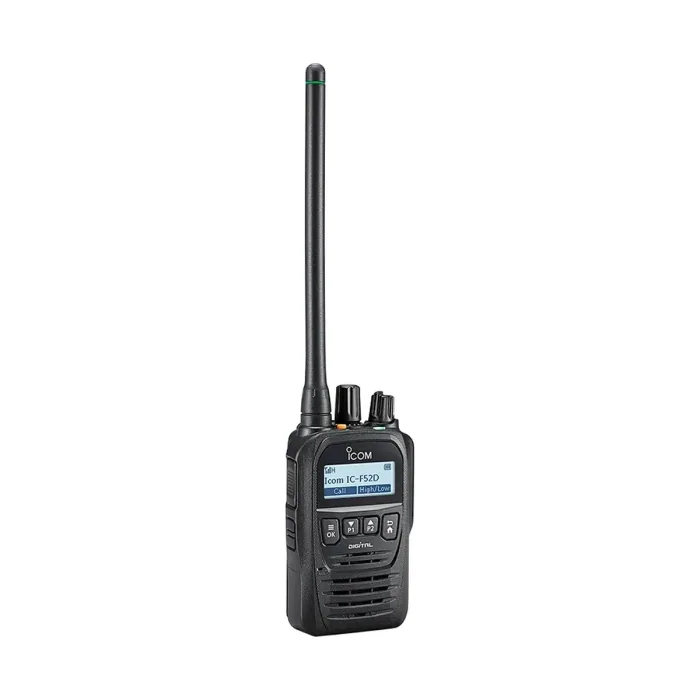
ASPL is an authorised distributor of Entel in India and supplies Icom's ATEX-rated range alongside it. Entel's hazardous-area line, decoded in full in the dedicated model-code article elsewhere in this series, spans analog and digital handhelds across the DT, DX, M, FF and IS model families, from the general-purpose Entel DT842 and DT944 through to the marine-rated FF variants and the intrinsically safe DX-IS series. Icom's IC-F52D-UL / IC-F62D-UL covers the same ground on the digital VHF/UHF side, UL913-certified rather than ATEX. Between the two brands, the range covers Zone 1 and Zone 2, IIA through IIC gas groups, and both analog and digital operation, which is normally enough range to match against most industrial sites' classification documents without a compromise on either certification or radio features.
Supply, certification and service as one relationship
Buying a certified radio is only the first part of what a hazardous-area fleet actually needs. The certificate describes an exact configuration, radio, battery and antenna together, and any later repair or battery swap has to preserve that configuration, covered in more depth elsewhere in this series, or the certification itself is put in question. ASPL supplies, and separately repairs and services, the equipment it sells, through manufacturer-supported channels rather than a general repair shop working from outside the certification's requirements, with a nationwide network of delivery and collection points for warranty and repair work.
Who actually needs this equipment
- Refineries, tank farms and chemical plants, where Group II surface-industry hazardous-area classifications apply.
- Oil and gas sites, both upstream and processing, where gas group and zone requirements can vary considerably across one facility.
- Paint, solvent and other flammable-vapour handling and storage operations.
- Grain handling and other combustible-dust environments, where a D-rated (dust) certification matters alongside or instead of a G (gas) rating.
Where to start
- Get your site's own hazardous-area classification documents (zone, gas group, temperature class) before shortlisting any specific radio.
- Confirm whether your site or corporate policy specifies ATEX, IECEx or UL913, since that determines which certified equipment is eligible at all.
- Factor PESO approval into the procurement timeline from the start, not after equipment has already been ordered.
- Order the radio, battery and antenna as the single certified configuration the certificate covers, and don't substitute a component later.
ASPL supplies, certifies-to-order and services ATEX and IECEx-rated Entel and Icom radios for hazardous-area sites across India, and can work through the specification process directly against a specific site's classification documents.