
Two different questions, often answered by the same visit
A vessel's compliance rests on two formally separate things: classification, a private technical certification that a ship's hull, machinery and systems meet a classification society's own published rules, and statutory certification, the legal certificates a flag state, DG Shipping for an Indian-flag vessel (transitioning to the Directorate General of Maritime Administration, DGMA, under the Merchant Shipping Act, 2025), is internationally obligated to issue under conventions such as SOLAS, MARPOL and the Load Line Convention. A classification society explicitly does not certify that a vessel is safe or seaworthy in any general sense; it certifies compliance with its own rules, and a ship is simply "in class" or "out of class" against them. In practice the two checks are often carried out by the same surveyor on the same visit, which is exactly why the terms get blurred, covered below.
What a classification society actually does
Three things, in order: it writes and publishes its own technical rules covering hull structure, machinery, electrical systems and more; it surveys a vessel during construction against those rules before assigning class; and it carries out periodic in-service surveys through the vessel's life to confirm class is maintained. This rule-writing and surveying function is a private, non-governmental one, entirely separate from any government's regulatory authority, which is what makes the next point, how a private body ends up doing government-mandated statutory work, worth explaining properly.
Recognised Organisations: how the overlap happens
The IMO's Code for Recognised Organisations, adopted through Resolutions MSC.349(92) and MEPC.237(65), sets out how a flag state may formally authorise a classification society to carry out statutory surveys and issue statutory certificates on its behalf. Once authorised, that classification society is a Recognised Organisation, RO, for that flag state, and a single surveyor visit can close out both the vessel's class survey and its statutory survey together. This is the direct answer to why a GMDSS radio survey, covered in the dedicated article elsewhere in this series, is described there as carried out either by "nautical surveyors of the maritime administration" or by "Recognised Organisations authorised to act on the administration's behalf": those Recognised Organisations are classification societies operating under exactly this delegation.
IRClass: India's own classification society
The Indian Register of Shipping, branded IRClass, was founded in 1975 and is headquartered in Powai, Mumbai. It joined the International Association of Classification Societies, IACS, the technical body whose twelve full member societies collectively write classification rules covering the large majority of world cargo tonnage, as an associate member in 1991 and became a full member in 2010. IRClass functions as India's own national classification society and is named as a Recognised Organisation by India's maritime administration, appearing with a Mumbai office on the administration's own published RO listing. An IRClass executive, Arun Sharma, chaired the IACS Council from 2019 to 2020.
Lloyd's Register and DNV: the two other names an Indian operator will see
Lloyd's Register, headquartered in London, traces its origins to 1760 and is generally regarded as the world's first classification society; it is one of IACS's founding members and today operates as a company wholly owned by the Lloyd's Register Foundation, a UK-registered charity. DNV traces to Det Norske Veritas, founded in Norway in 1864, which merged with the Hamburg-founded Germanischer Lloyd in 2013 to form DNV GL before simplifying its name back to DNV in 2021; it is headquartered near Oslo and is also a full IACS member. Both appear by name, Lloyd's Register as "Lloyd Register Asia" and DNV as "DNV GL," with Mumbai offices on India's own published Recognised Organisation listing alongside IRClass, meaning either can act as an RO on an Indian-flag vessel in addition to classing vessels under their own rules.
Where equipment fits into any of this
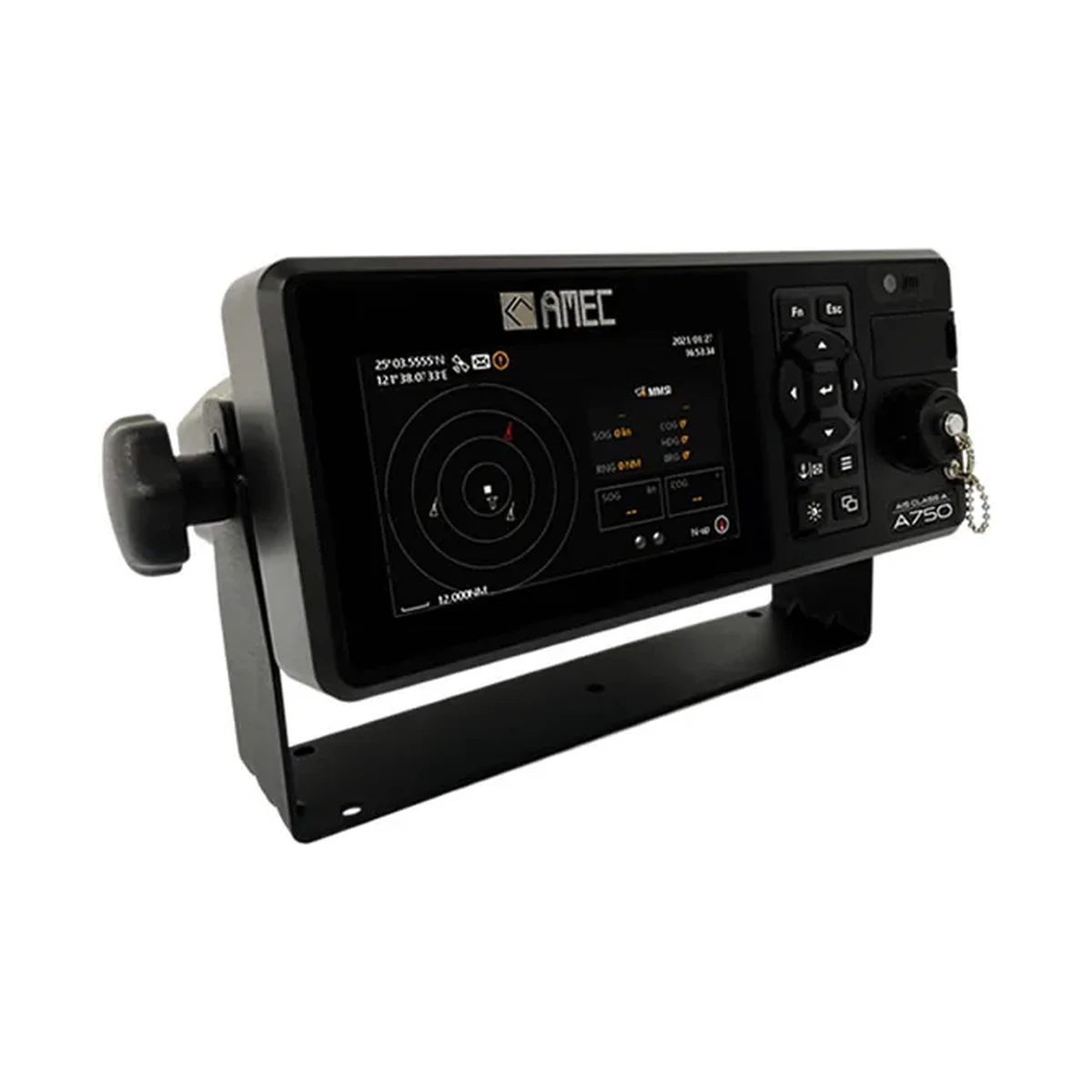
Neither classification nor a statutory survey is an equipment-only concern; both examine the vessel as a whole, structure, machinery, electrical systems and safety equipment together. Radio and navigation equipment, a GMDSS installation, an AIS transponder such as the AMEC A750, is one part of what a surveyor checks under the statutory side of that visit, covered in practical detail in the GMDSS radio survey article elsewhere in this series, rather than something a classification society certifies as a standalone product. Equipment carrying its own type approval, ITU-R M.493 DSC certification or IMO resolution compliance, covered elsewhere in this series, is what a surveyor is checking the installation against; the equipment's own certificate and the vessel's class or statutory certificate are related but distinct pieces of paper.
What this means for ASPL's part in it
ASPL is not a classification society and holds no Recognised Organisation status; it supplies, installs, commissions and services GMDSS, AIS and marine navigation equipment, and that equipment's own type approval and certification is what a classification society or Recognised Organisation surveyor checks during a class or statutory visit. Which classification society or RO a specific vessel actually uses, and the current requirements that survey will apply, sits with the vessel's owner, its flag administration and the classification society itself, not with an equipment supplier.