Most riders navigate with a phone first, and for a short loop on familiar roads it works. The question is what happens on the longer, less familiar ride, and whether that ride is the one you mostly do. Here is where the two differ.
Which lasts longer on a ride?
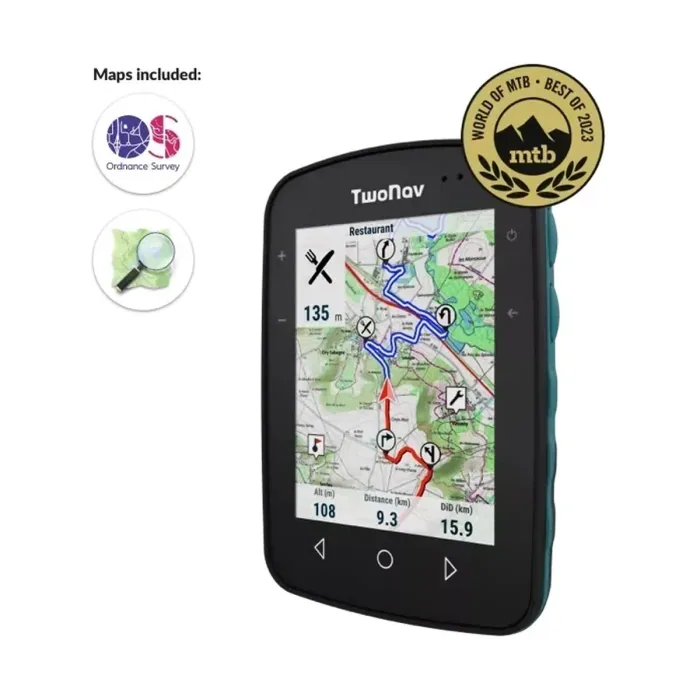
A dedicated GPS, by a wide margin. A phone running a lit screen and live navigation is doing two of the most power-hungry things it can do, and it rarely lasts a long day. When it runs flat you lose the map and the phone you would use to call for help. A dedicated GPS has one job. The manufacturer lists 18 hours for the TwoNav Roc, 15 for the Terra, 20 for the Cross Plus and 36 for the Aventura 2 Plus, and your phone stays in the pocket, charged.
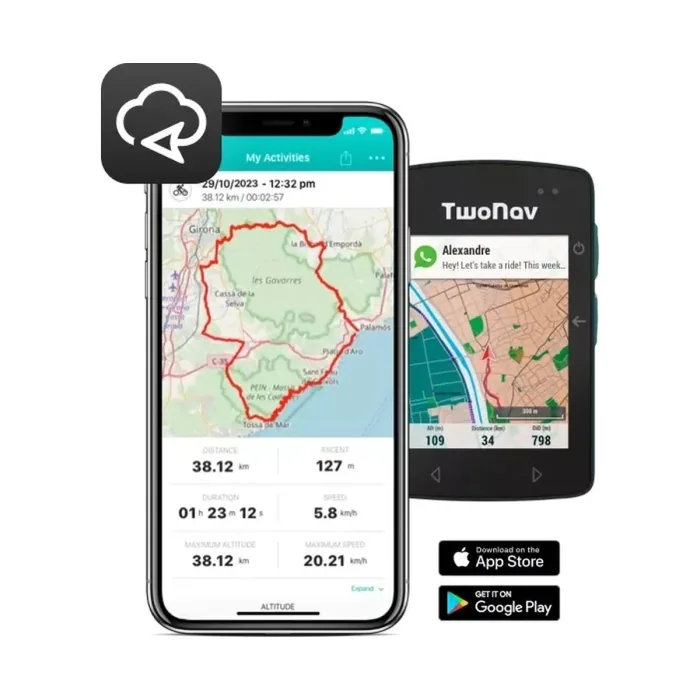
Does navigation work without mobile signal?
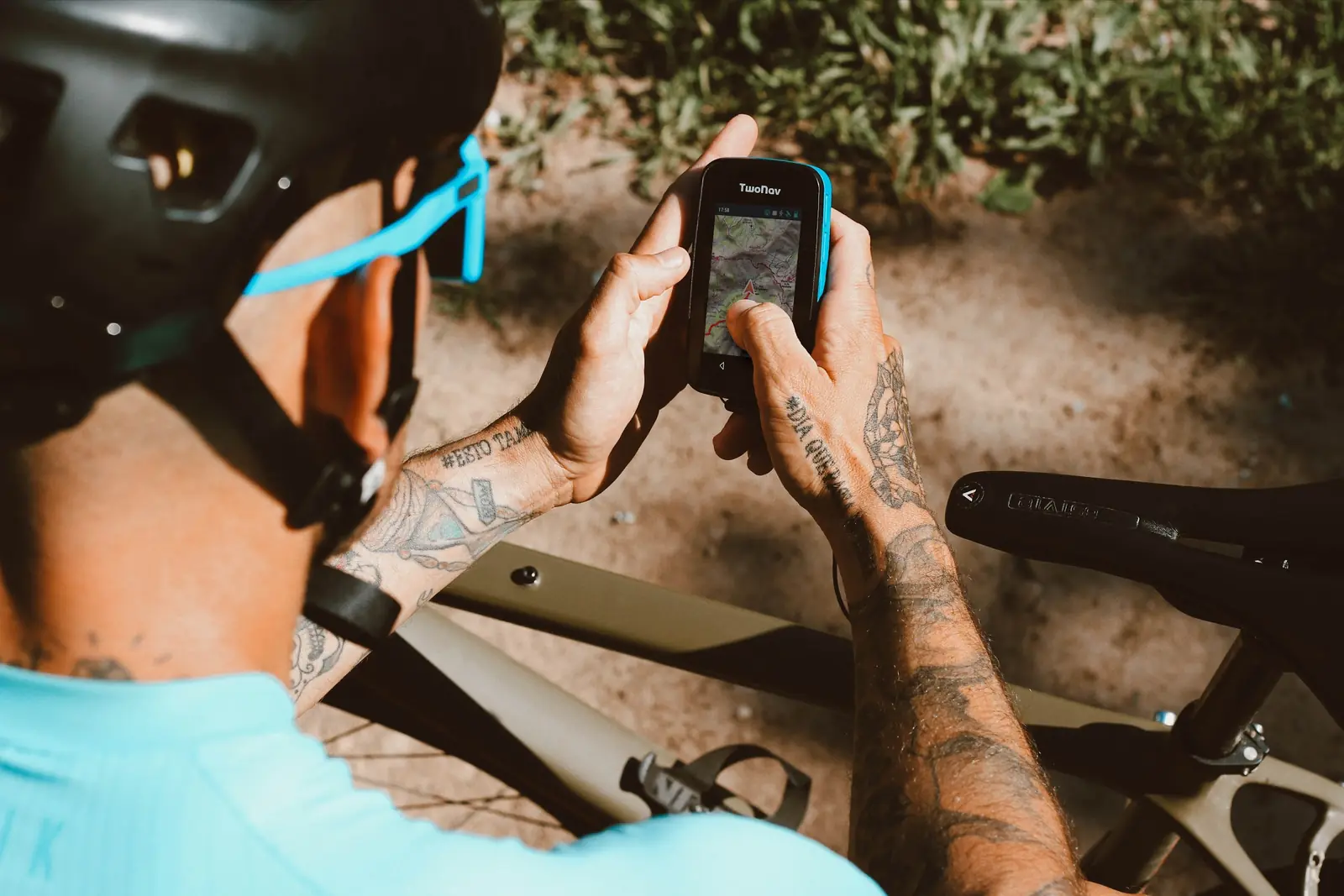
The satellite fix does on both; the map only does if it is stored on the device. The satellite fix itself never needs mobile data, on a phone or a GPS. The map does, unless it is already stored on the device. Most phone navigation apps stream map tiles as you go, so a valley with no signal can leave you with a blue dot on a blank grey screen. A bike GPS carries its maps in its own memory; the four TwoNav units have 32 GB each, and the Cross Plus and Aventura 2 Plus take a memory card as well. If you stay with the phone, download the offline map for the whole route before you leave.
Which works better in rain or gloves?
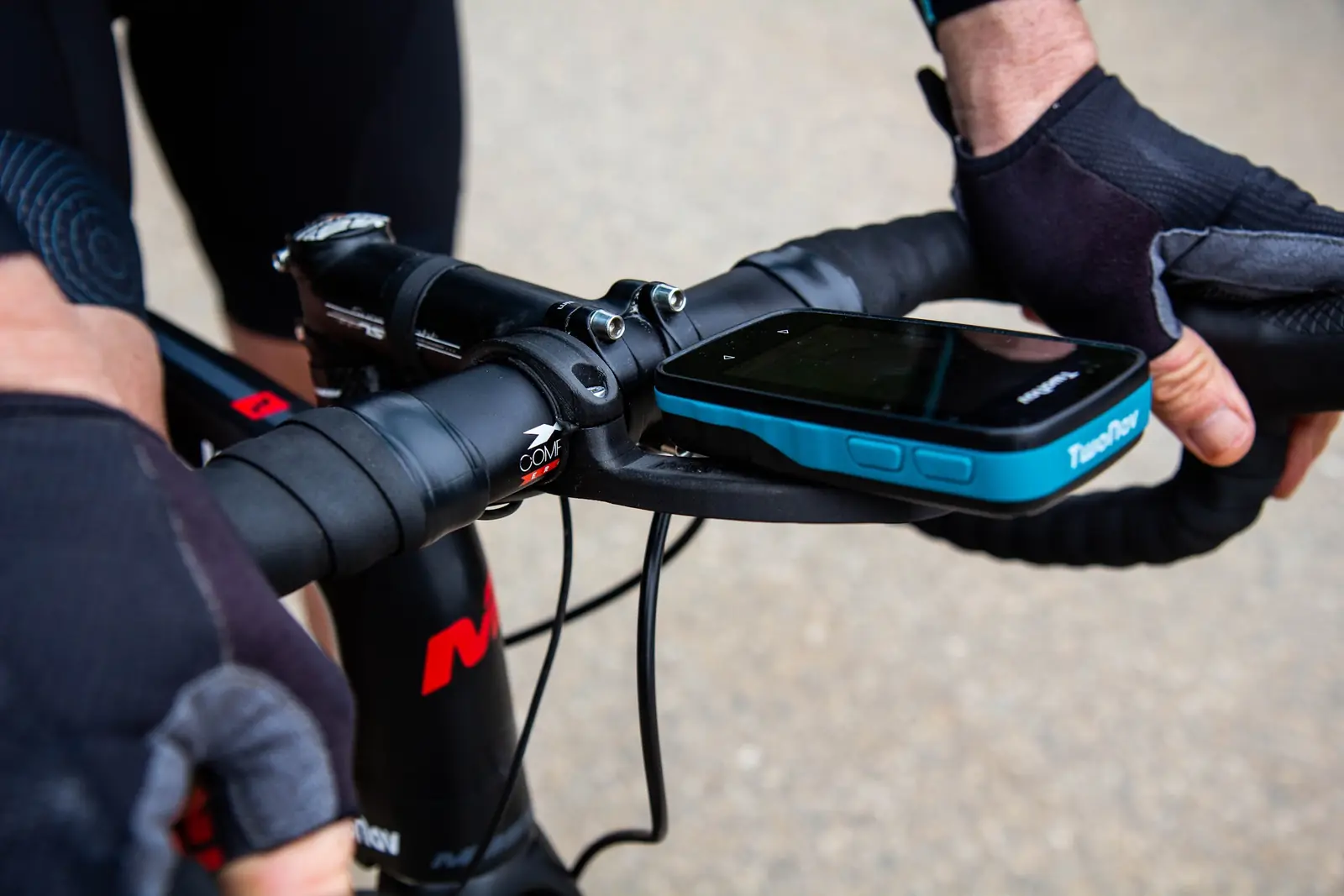
Buttons do. Touchscreens read a wet drop or a sweaty thumb as a touch, and most ignore a gloved finger. Every TwoNav unit has physical buttons, and the Cross Plus and Aventura 2 Plus add a joystick sealed against water, dust and mud.
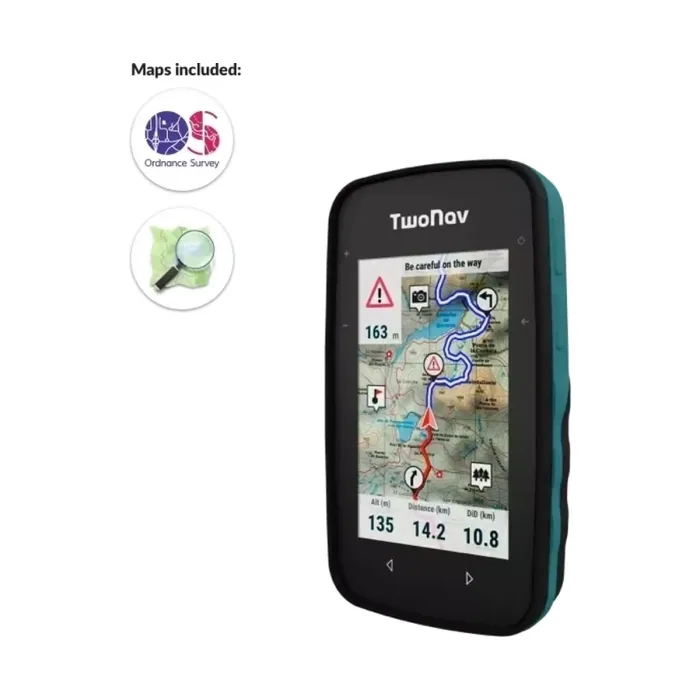
Which is easier to read in sunlight?
A screen built for it. Phone screens are bright, but they are designed for indoor use first. At noon on an open road a glossy screen can turn into a mirror. Bike GPS screens are built to be read in direct sunlight; TwoNav's Cross Plus and Aventura 2 Plus use an optically bonded display with an automatic backlight.
Which is safer on the handlebar?
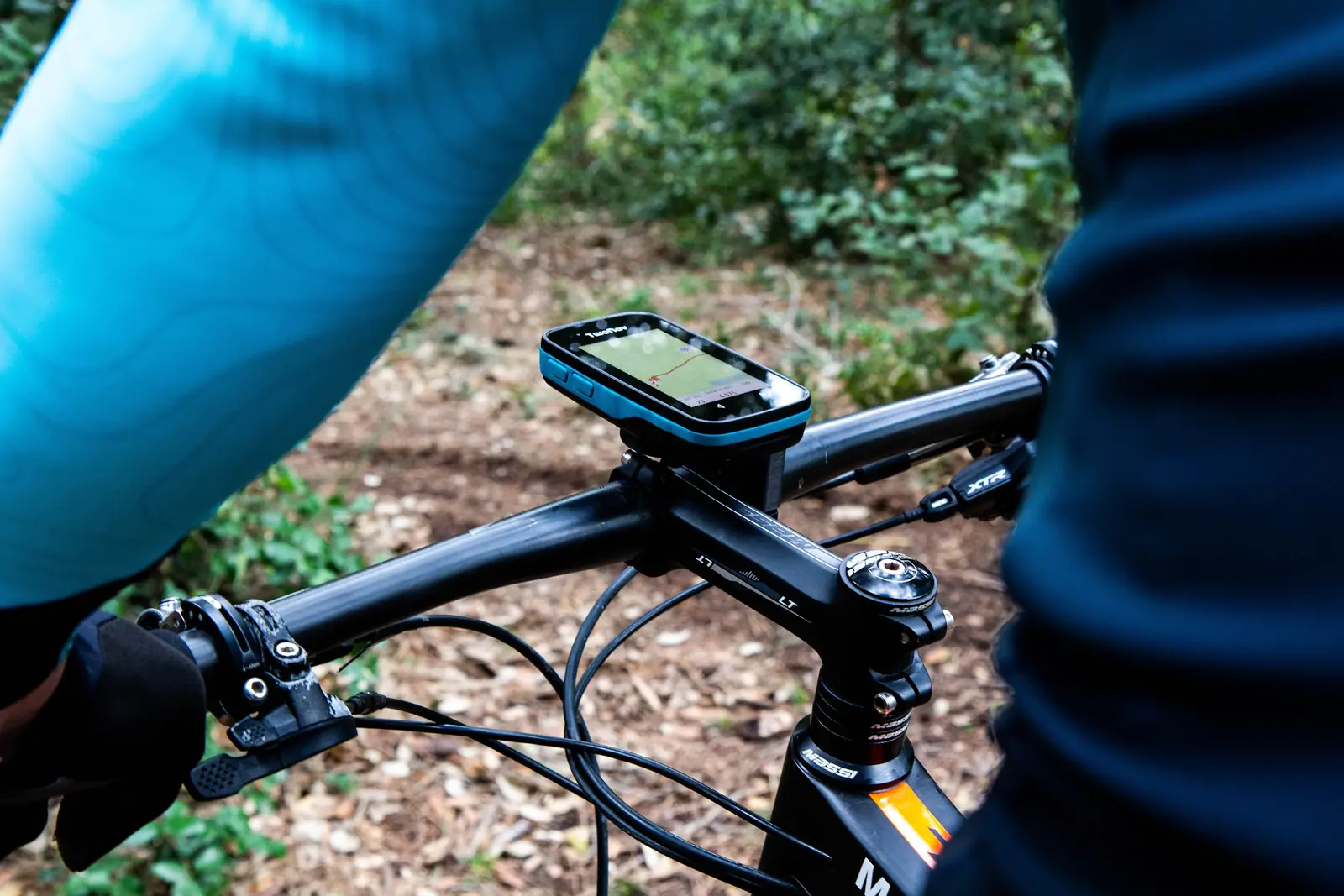
The device built to live there. A phone mount puts an expensive, fragile device in the place most likely to hit the ground in a fall. A bike GPS is made to live there: the Roc is 120 g and 58 x 90 x 20 mm, and the Cross Plus and Aventura 2 Plus are rated IP67 and tested to MIL-STD-810 for shock, water and vibration.
Which shows more ride data?
A bike GPS. A phone app can record a ride, but it shows a few fields at a time. The Roc shows more than 200 real-time data fields and turns a route into a roadbook with directions and alerts. Heart-rate, cadence and power sensors pair over Bluetooth or ANT+, depending on the unit.
When is a phone enough?
If your rides are short, on roads you know, in places with good signal, a phone in a decent mount will do. Once you are riding longer than the phone lasts, off the road map, or in weather, a dedicated unit earns its place. The cycling GPS page suggests one for each kind of riding.