
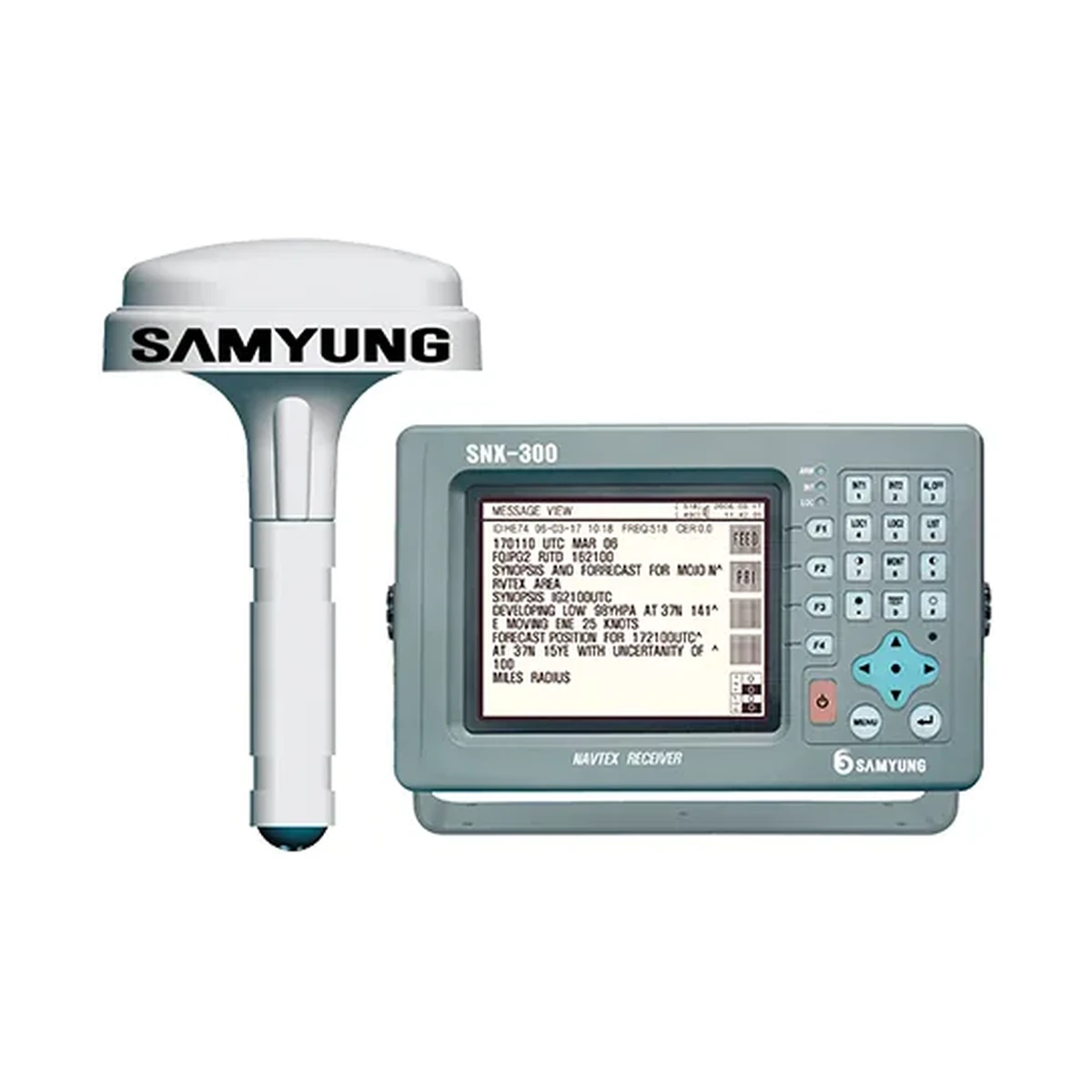
Most safety equipment on a bridge waits to be used. A NAVTEX receiver is the exception. It sits powered up, receives broadcasts on a fixed frequency around the clock, filters out what does not concern the vessel, and prints or displays what does. Crews sometimes treat it as background furniture for exactly that reason, which undersells what it is doing.
What NAVTEX actually carries
NAVTEX is the international service for broadcasting maritime safety information to ships in coastal waters. It is a core element of GMDSS, and the traffic falls into a few recognisable categories: navigational warnings such as buoys off station, wrecks, lights out or newly reported dangers; meteorological warnings and forecasts; ice reports where relevant; pilot and port service messages; and search and rescue information, including relayed distress traffic.
Broadcasts are made by coast stations, each covering a defined area and identified by a single character station identifier, with each message type carrying its own subject character. That structure is what lets a receiver reject stations and subjects that do not apply to the vessel while making the safety critical categories impossible to switch off.
The frequencies
The international service runs on 518 kHz in English, which is the channel every NAVTEX receiver must handle. National services broadcast in the local language on 490 kHz, and 4209.5 kHz is used for a further NAVTEX service. A practical receiver covers more than one of these, and the Samyung SNX-300 is a typical example: it receives 518 kHz for the international English broadcast plus 490 kHz or 4209.5 kHz for local language traffic, demodulating F1B with 2 microvolt sensitivity at a rated 4 percent error rate.
Why a receiver, when the same information exists elsewhere
Weather and navigational warnings can be found in many places today, so the case for a dedicated receiver deserves stating plainly.
- It works with no connectivity. NAVTEX is a terrestrial broadcast, so it does not depend on cellular coverage, satellite airtime or a subscription.
- It is unattended. Messages arrive and are stored whether or not anyone is at the console, which suits a small bridge team on passage.
- It filters. Once configured for the stations and message categories relevant to the voyage, the receiver stops repeating what the crew has already seen and suppresses areas that do not apply.
- It keeps a record. A printed or stored message log is evidence of what the vessel was told and when, which matters after an incident.
What to look for in a set
Display and printing come first. The SNX-300 shows messages on a 5.6 inch 320 by 240 LCD and can also print them through a built in thermal serial dot printer, at 52.5 characters per second in normal mode. A screen suits a bridge where nobody wants to manage paper; a printer suits operations where a physical record is expected.
Storage capacity is the next question. The SNX-300 holds up to 200 messages per channel, around 1.6 million characters, with permanent storage for 50 messages and a maximum message retention period of 72 hours. Retention matters more than raw capacity: a warning that expires out of the log before anyone reads it has not helped.
Then the physical and electrical fit. The SNX-300 runs from a 10 to 36 V DC supply at 12 W on 24 V, weighs 2.6 kg in a 255 by 163 by 75 mm case, and is rated from -15 C to +55 C. Antenna arrangements deserve attention too: the unit expects a 50 ohm active antenna and supplies 9 V to it, so the antenna is part of the system rather than an afterthought.
Where it sits in the GMDSS picture
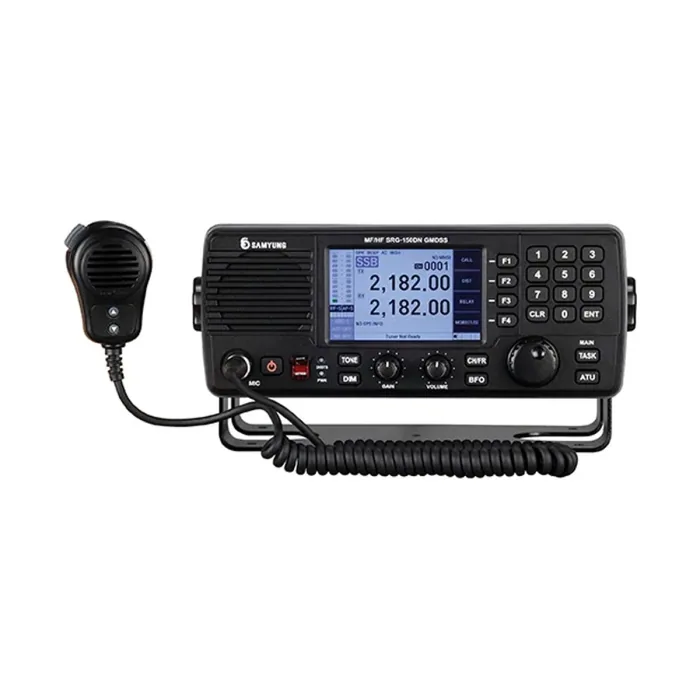
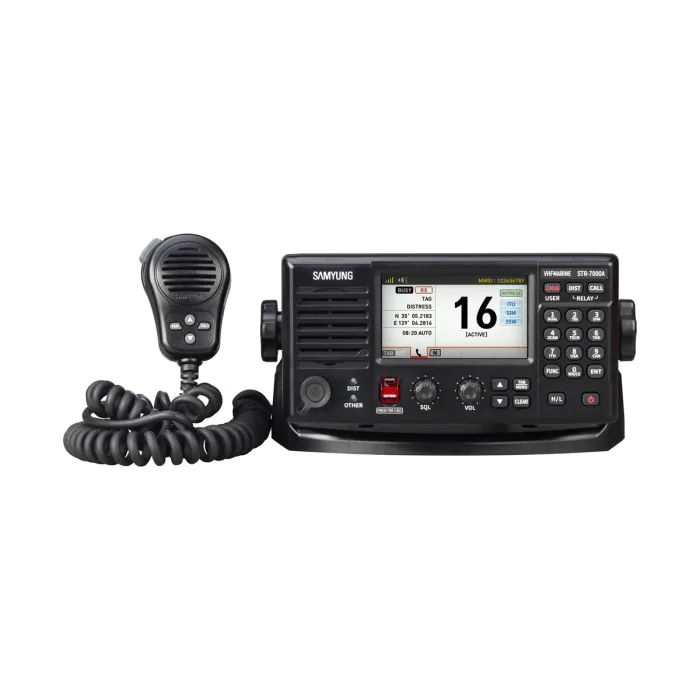
NAVTEX covers maritime safety information within coast station range. Beyond that coverage, the same category of information reaches vessels by satellite broadcast instead. Neither replaces the alerting side of GMDSS, which is what DSC on VHF and MF/HF is for. A well found offshore vessel ends up with all three working together: DSC to raise an alarm, NAVTEX to receive warnings automatically inshore, and satellite services where the terrestrial broadcast does not reach.
ASPL supplies GMDSS equipment, marine VHF and AIS to commercial vessels and fishing fleets across India, and fits, commissions and hands over the installation with operator training for bridge crew.