
Most NMEA 2000 retrofits start the same way. A new chartplotter, AIS transponder or engine gateway arrives with a Micro-C connector on the back, the boat has none, and a single-instrument upgrade has turned into a network project. It is a manageable project, but it goes badly when it is treated as wiring rather than as design. The network has rules about length, termination and power, and existing NMEA 0183 equipment does not disappear just because something newer has arrived.
What you are actually building
NMEA 0183 is a point-to-point serial standard: one talker sends data down a pair of wires to one or more listeners, commonly at 4,800 baud. NMEA 2000 replaces that with a shared CAN-bus backbone. A single cable runs the length of the boat, each device connects to it through a short drop cable at a T-piece, and any device can both send and receive without being wired directly to any other. That is the appeal of the retrofit: adding the next instrument becomes a matter of plugging into a spare T.
Survey what you already have first
Before buying anything, list every device that produces or consumes data and note which protocol it speaks. A typical older boat has an NMEA 0183 GPS, an autopilot expecting 0183 navigation sentences, a VHF with DSC wanting a position input, a depth sounder and possibly an AIS unit at 38,400 baud. Each is either staying on 0183, moving onto the new bus through a gateway, or being replaced. Deciding which before the first cable is run keeps the job from doubling in size halfway through.
Planning the backbone
The physical rules are not negotiable, and most retrofit faults trace back to breaking one of them.
- The backbone runs end to end and must be terminated with a 120 ohm resistor at each of its two physical ends. Two terminators, no more and no fewer. A missing terminator can leave a bus that appears to work and then throws intermittent errors.
- Each device connects through a drop cable, which should not exceed 6 metres, and the shorter the better.
- A single backbone run is limited to around 100 metres depending on cable type, which is ample on most vessels but worth checking on a long one.
- Power is fed into the backbone at a single well-fused point, not from several sources at different places along the run.
- Route the backbone where you can reach it. A network buried behind joinery is one you will curse the first time you add an instrument.
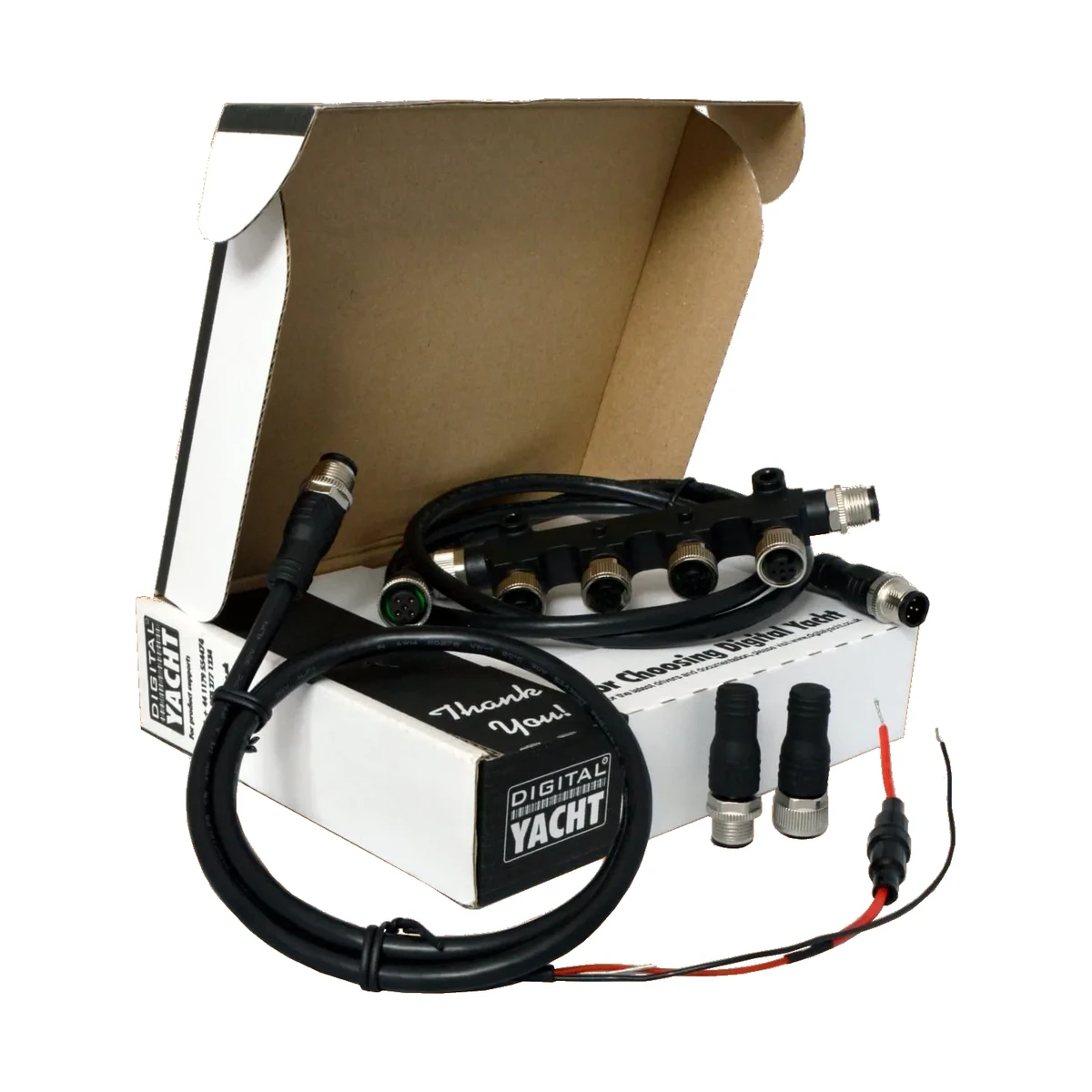
On a small boat with modest ambitions, a packaged kit removes the guesswork. Digital Yacht's NMEA 2000 starter kit connects up to three devices, say an AIS, a plotter and an autopilot, and comes with a multi-way backbone block, a fused power cable, a drop cable and a pair of removable terminators, using nickel-plated metal Micro-C connectors so the network can be expanded later with standard parts.
Budget the power before you plug things in
Every device on the bus draws from a shared supply, expressed as a load equivalency number where one LEN equals 50 mA. A Garmin GMI 20 instrument display, for example, carries a LEN of 3, which is 150 mA at 9 Vdc. Add up the LEN of everything you intend to connect and compare it with what the backbone's power source can supply, leaving headroom for what you add next season. Running out of power budget is a less obvious failure than running out of connectors: it shows up as devices dropping off the bus rather than as anything resembling a power fault.
Keeping the old instruments in the system
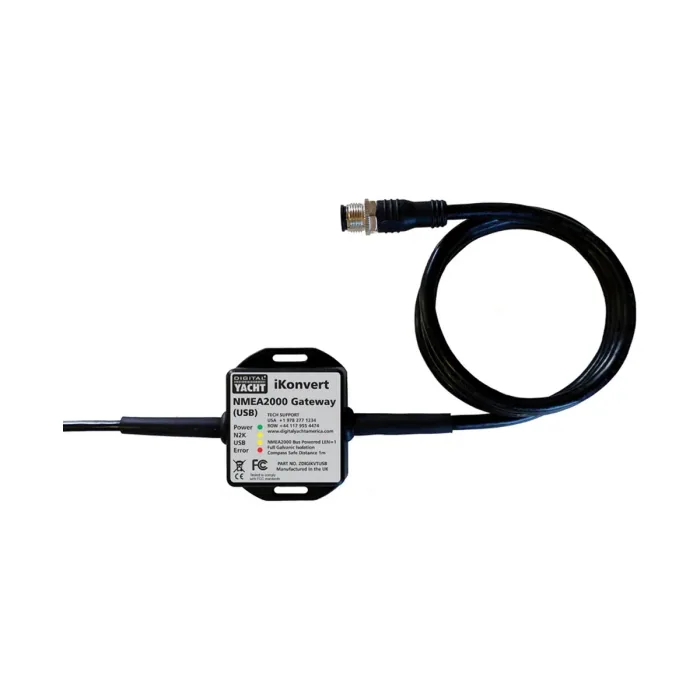
This is where most of the value in a retrofit sits, because replacing working 0183 equipment is rarely justified. A gateway translates between the two protocols in both directions. The Digital Yacht iKonvert NMEA 2000 to NMEA 0183 converter does exactly that, with a set of internal DIP switches selecting a mode such as heading, sounder, AIS, GPS, wind, instruments or a general all-data gateway, which sets both the conversions performed and the baud rate used. It takes its power from the NMEA 2000 network and provides full galvanic isolation between the two sides, which matters on a boat where the 0183 gear may sit on a different ground.
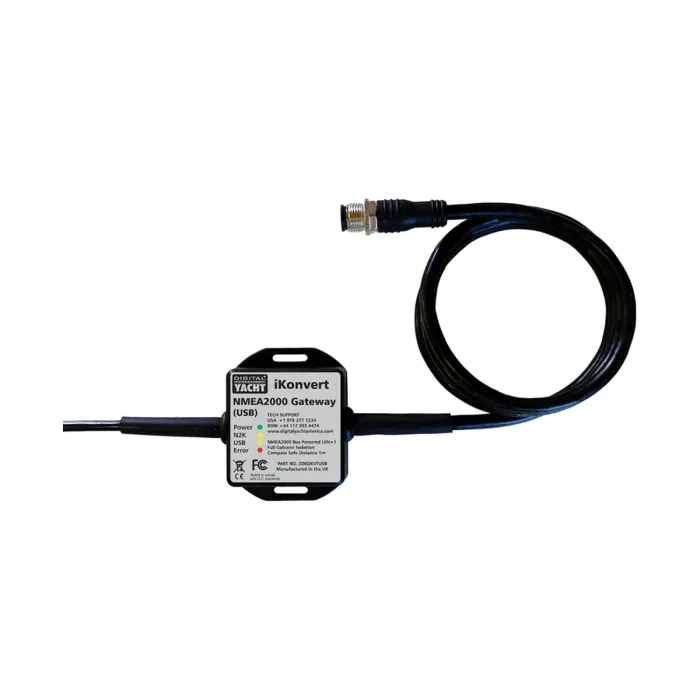
Two related cases come up constantly. If several 0183 talkers need to reach a single input, that needs a multiplexer rather than a splice: the WLN30 Smart Wireless NMEA Multiplexer takes three NMEA 0183 inputs at 4,800 or 38,400 baud, combines them and offers the merged data on an NMEA 0183 output as well as over its own password-protected wireless network. And if the data needs to reach a PC or a Signal K server, the iKonvert NMEA 2000 to USB converter presents the bus either as converted 0183 sentences or as raw PGN data over USB.
Getting the data onto phones and tablets
Once the bus exists, a wireless gateway makes it visible to navigation apps without further cabling. Digital Yacht's NavLink 2 is a compact NMEA interfacing device for this job, and the WLN10 Smart does the same for existing 0183 systems. Do it early: a tablet showing live instrument data is the quickest way to confirm during commissioning that every sensor is reaching the network.
Commissioning
When the backbone is in, power it up with everything connected and check that each device appears in the plotter's device list. Confirm both terminators are fitted and that only one power injection point is live. Then check the data itself rather than just the device count: position, depth, speed, wind and heading should each be readable on a display that did not originate them. ASPL supplies NMEA 0183 and NMEA 2000 interfacing gear for bridge integration on commercial vessels, along with commissioning and operator handover.