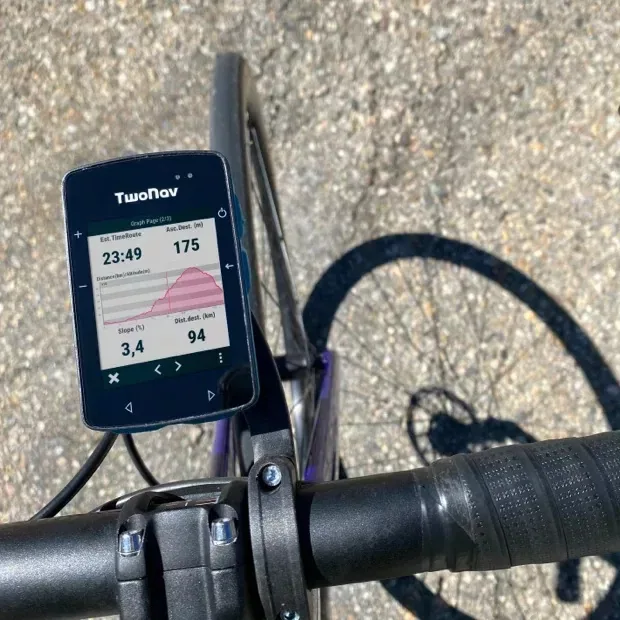
Most riders start with a phone on the handlebar, and for a short ride on roads you know it does the job. The trouble starts on the long day, the unfamiliar route, or the climb where the signal drops. A dedicated GPS exists for those rides. Here is what to check before you buy one, in the order the questions usually matter.
1. Battery life against your longest ride
Take the longest ride you realistically do and add a margin for the day that runs late. The manufacturer's figures for the TwoNav range are 18 hours for the Roc, 15 hours for the Terra, 20 hours for the Cross Plus and 36 hours for the Aventura 2 Plus. For a multi-day trip away from a socket, a removable battery matters more than the headline number: the Aventura 2 Plus is the one in this range with a removable 6000 mAh pack.
2. Maps on the device, not on the network
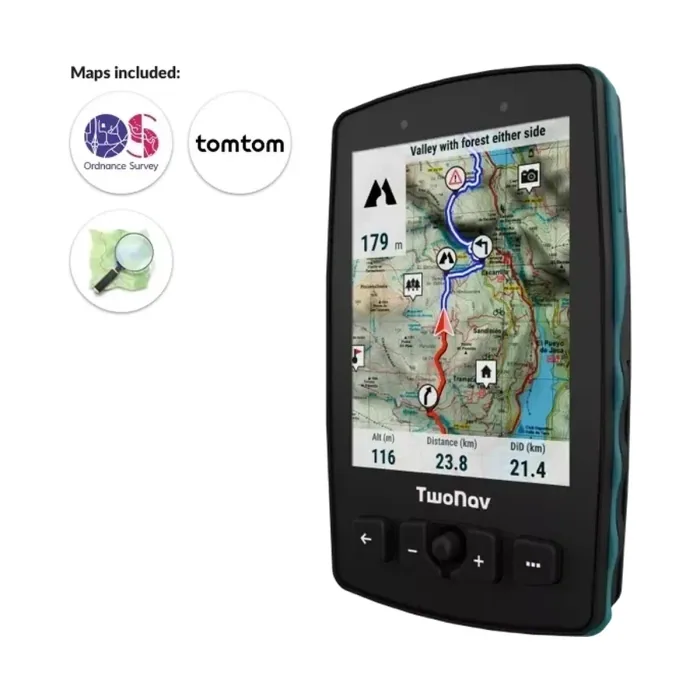
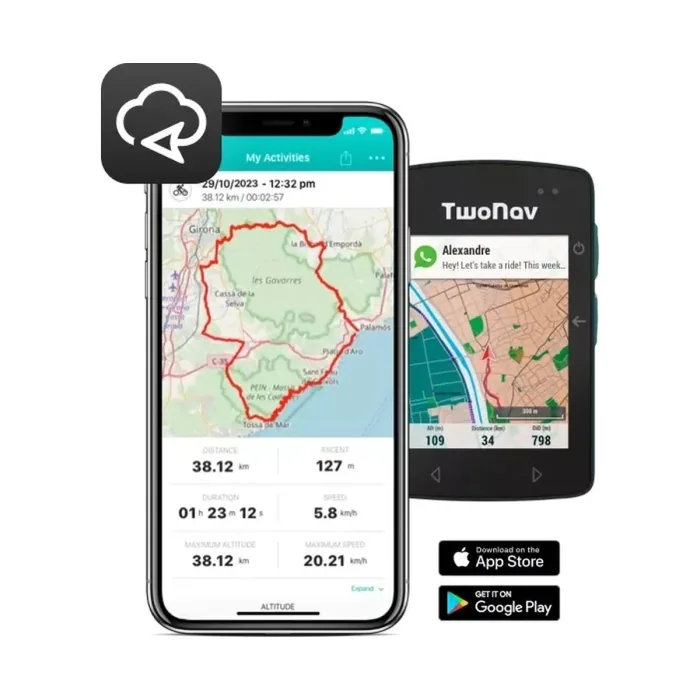
A satellite fix needs no mobile data. A map does, unless it is already stored on the device. A GPS that carries its maps in internal memory keeps drawing the route in a valley with no signal. All four units have 32 GB of internal memory, and the Cross Plus and Aventura 2 Plus add a memory card slot. Map coverage differs between bundles, so confirm which map is supplied for the area you ride before you order.
3. Satellite systems
A receiver that tracks more than one constellation sees more satellites at once, which helps under tree cover and between buildings. The Roc, Terra, Cross Plus and Aventura 2 Plus all list GPS, Galileo, Glonass and BeiDou. If you want the background, we have a longer piece on GPS, GLONASS and GNSS.
4. Screen and controls
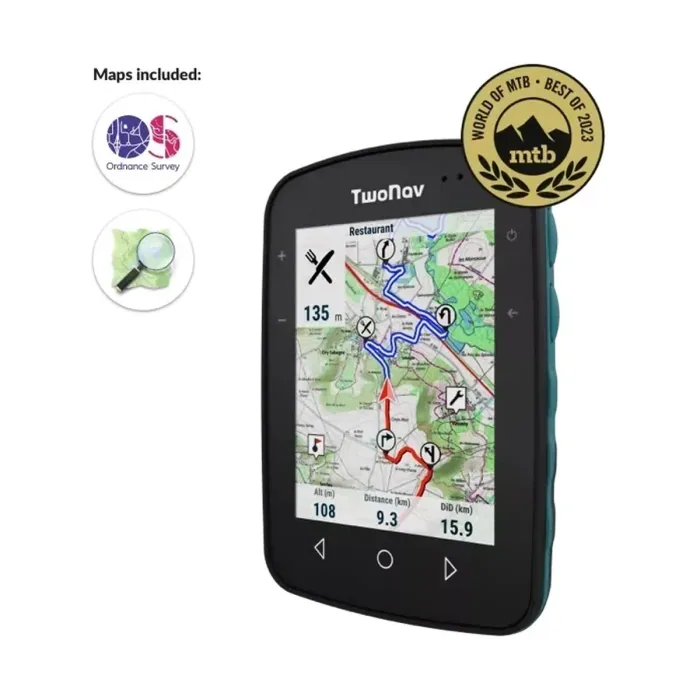
Screen size is a trade against weight. The Roc has a 2.7-inch screen and weighs 120 g. The Terra has a 3.7-inch screen at 480 x 640 pixels and weighs 198 g. A bigger map is easier to read when you are choosing between two trails; a smaller unit is less to carry and less to knock. Check the controls too. Touchscreens are awkward with wet fingers or gloves, so physical buttons are worth having on anything you will use in the monsoon.
5. The sensors you already own
Heart-rate straps, cadence sensors and power meters connect over ANT+ or Bluetooth, and many support both. In this range the Cross Plus and Aventura 2 Plus list ANT+, and the Roc and Terra list dual Bluetooth. Write down the sensors you have and what they transmit, and check that against the device before buying.
6. Weather and knocks
An IP rating tells you what a device was tested against. IP67 means dust-tight and tested for immersion in water up to one metre for 30 minutes. The Cross Plus and Aventura 2 Plus are rated IP67 and tested to MIL-STD-810 for temperature, shock, water and vibration, with a stated range of -20 °C to 70 °C.
7. Who repairs it
A GPS bought through an unofficial channel can leave you with nowhere to send it. ASPL is the authorised distributor for TwoNav in India and supports the devices through its in-house service centre.
Where to go next
The cycling GPS page puts the four units side by side and suggests one for each kind of riding. If you are already down to two or three, read Roc vs Terra vs Cross Plus.