
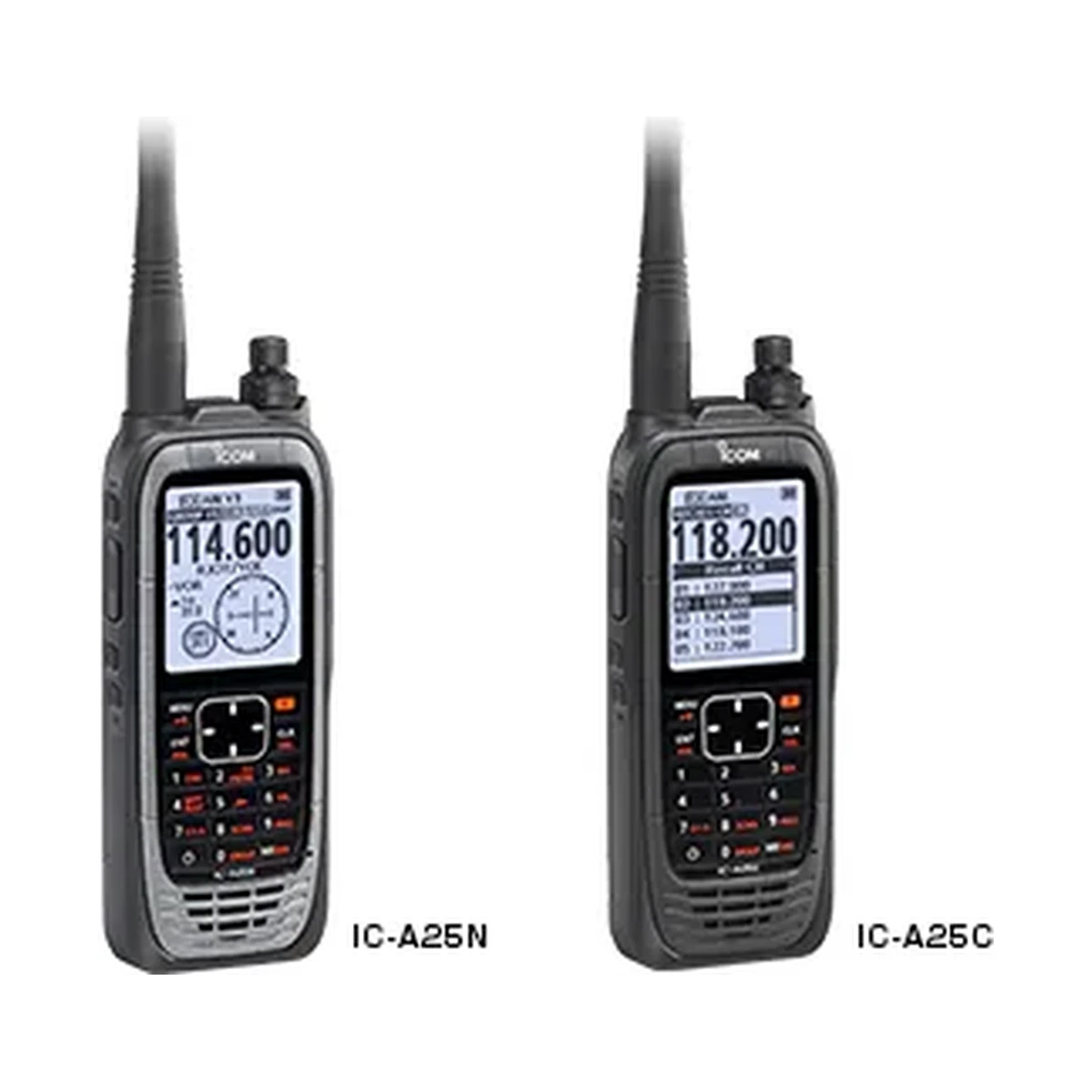
What do the IC-A25N and IC-A25C have in common?
The IC-A25N and IC-A25C are built on the same physical platform: 300 memory channels across 15 groups, 8.33 and 25 kHz channel spacing, the same weather channel reception at 161.650 to 163.275 MHz, the same 6.0 W PEP / 1.8 W carrier output power, and the same 340 g weight with the BP-288 battery fitted. As communication radios, transmitting and receiving on the VHF air band, they are identical.
How do the IC-A25N and IC-A25C differ?
The specification difference is stated plainly in Icom's own product data: the IC-A25N offers NAV and COM channels, while the IC-A25C offers COM channels only. That single line is the whole basis for choosing between them.
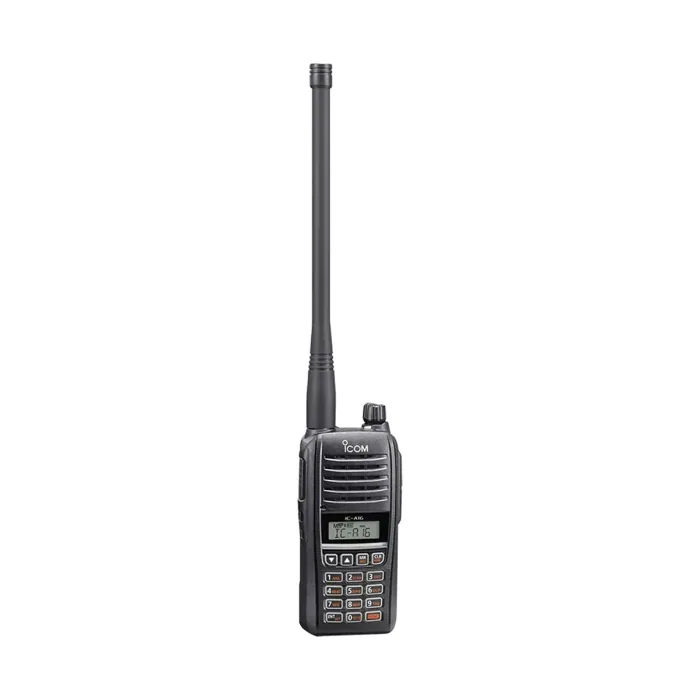
What does the IC-A25N add?
Built-in GPS on the IC-A25N enables simplified waypoint navigation directly on the handheld, without needing a separate GPS device or a paired app for basic point-to-point guidance. It adds VOR navigation functions, letting the radio interpret and display VOR-based course information the way a dedicated navigation receiver would. A near-station search function helps a pilot quickly identify and tune the nearest relevant station. And flight plans can be created and managed through a companion Android and iOS app, extending the handheld's usefulness beyond the cockpit into pre-flight planning.
What is the IC-A25C?
The IC-A25C is a communication-only handheld with an otherwise identical platform: the same memory capacity, the same output power, the same weather channel monitoring, the same weight and dimensions. It exists for buyers who want everything the IC-A25 platform offers except navigation, either because that capability duplicates equipment already in the aircraft, or because it simply is not needed for how the radio will be used.
IC-A25N or IC-A25C: which should I buy?
- Aircraft with no panel-mount GPS or VOR receiver, or wanting backup navigation capability in the handheld itself: the IC-A25N is the clear choice, since its navigation features are not available on the IC-A25C at any price.
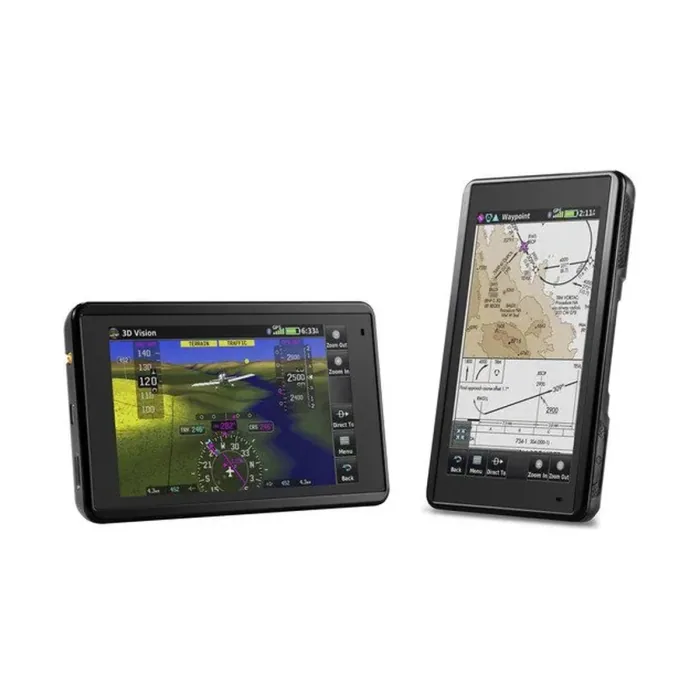
- Aircraft already well equipped with certified navigation avionics and a portable GPS such as the Aera 660 or Aera 760, where the handheld's sole job is backup communication: the IC-A25C delivers the same communication platform without paying for navigation features that would go unused.
- Buyers upgrading from an older handheld and unsure whether they will use GPS navigation on the radio: it is generally easier to justify the IC-A25N's added capability up front than to discover a need for it later and be limited by the IC-A25C's communication-only feature set.
Can the IC-A25N replace certified navigation equipment?
Even with GPS waypoint navigation and VOR functions built in, the IC-A25N remains a handheld supplement to an aircraft's certified navigation equipment, not a substitute for it, and its navigation capability is most valuable as backup situational awareness rather than as a primary means of navigation for any flight where that distinction matters. ASPL supplies both the IC-A25N and IC-A25C and can help match the right variant to what your aircraft's panel already provides.


