
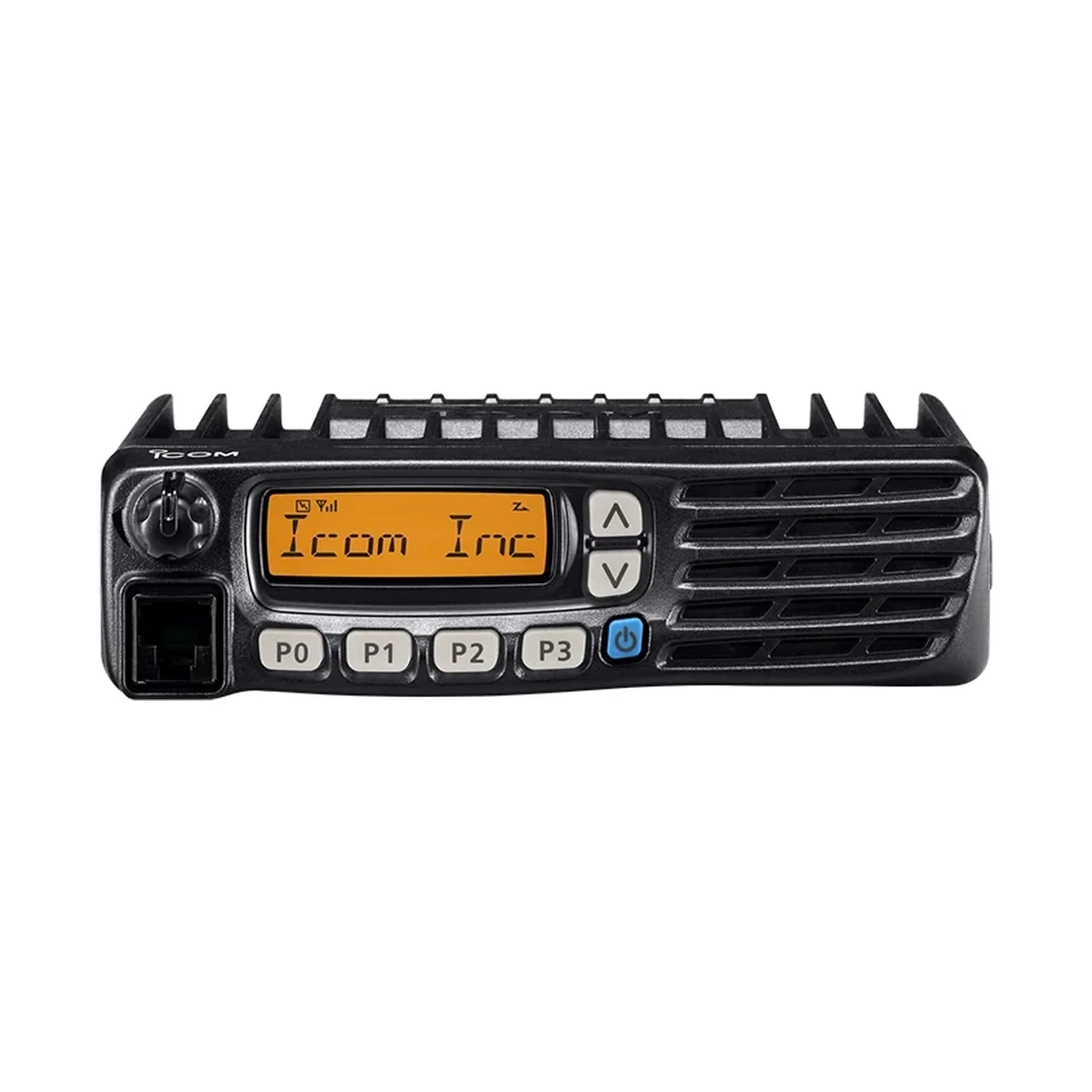
Two mobile radios, one role
A vehicle-mounted mobile radio serves a fleet, security patrol vehicle, delivery van, facilities truck, that needs stronger, more reliable communication than a handheld can provide, drawing power from the vehicle rather than a battery and connecting to a properly mounted antenna. The IC-F5023 and IC-F5330D both fill this VHF mobile role in Icom's range, one analog, one digital, and the comparison between them involves more than just the digital feature set covered elsewhere in this series.
Output power: a bigger gap than expected
The IC-F5023 delivers 25 W of RF output power. The IC-F5330D reaches considerably higher, up to 50 W on its high setting, with 25 W and 5 W as lower selectable steps. This is a genuinely significant difference in raw transmit power, not a marginal spec bump, and it means the IC-F5330D's advantage over the IC-F5023 is not solely about digital capability; it is also, independently, a more powerful radio at its top setting.
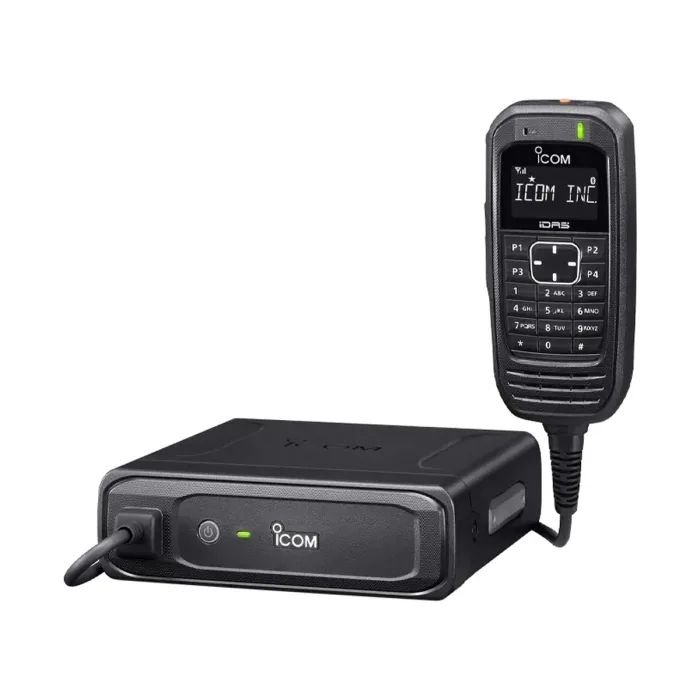
What the IC-F5023 offers
As a straightforward analog mobile radio, the IC-F5023 provides 128 channels across 8 zones, a front-mounted speaker, six programmable buttons, and MIL-grade rugged construction. It includes MDC 1200 compatible signalling, a widely used analog signalling standard supporting features such as caller ID and radio kill/stun/revive commands, alongside multiple 2-Tone and 5-Tone signalling and a lone-worker safety feature. For an operation needing a reliable, no-frills vehicle radio with useful analog signalling features but no digital capability, it remains a fully capable choice.
What the IC-F5330D adds
Beyond its higher output ceiling, the IC-F5330D brings the same digital capability covered elsewhere in this series, individually addressed calling, trunking support, data messaging, over the NXDN protocol, while retaining the ability to run analog channels through Mix Mode operation. Its IPX4 rating on the Commandmic accessory (a remote control head some vehicle installations use) reflects attention to the vehicle environment specifically, and it shares the broader digital range's IP68 main-unit ingress protection.
UHF alternative: the IC-F6330D
Where a UHF mobile radio is needed instead of VHF, the IC-F6330D mirrors the IC-F5330D's digital feature set at 400 to 520 MHz, with a slightly lower top power figure of 45 W against the IC-F5330D's 50 W, a difference worth noting when specifying for a UHF-band deployment rather than assuming identical output across both bands.
Choosing between them
- Straightforward vehicle communication, existing analog signalling infrastructure such as MDC 1200, cost-sensitive fleet: the IC-F5023 covers this role fully.
- Need for maximum transmit power regardless of digital capability, for instance covering a particularly large or difficult site from a vehicle: the IC-F5330D's higher power ceiling matters on its own, separate from any digital feature.
- Fleet needing addressed calling, trunking, or a path toward a broader digital system already covered elsewhere in this series: the IC-F5330D or, for UHF, the IC-F6330D.
- Mixed fleet transitioning gradually from analog to digital: the IC-F5330D's Mix Mode support allows digital-equipped vehicles to coexist with analog IC-F5023 units still in service elsewhere in the fleet.
ASPL supplies both the IC-F5023 and the IC-F5330D/IC-F6330D pairing in India and can help specify the right mobile radio, and the right power tier, for a specific vehicle fleet and coverage requirement.