
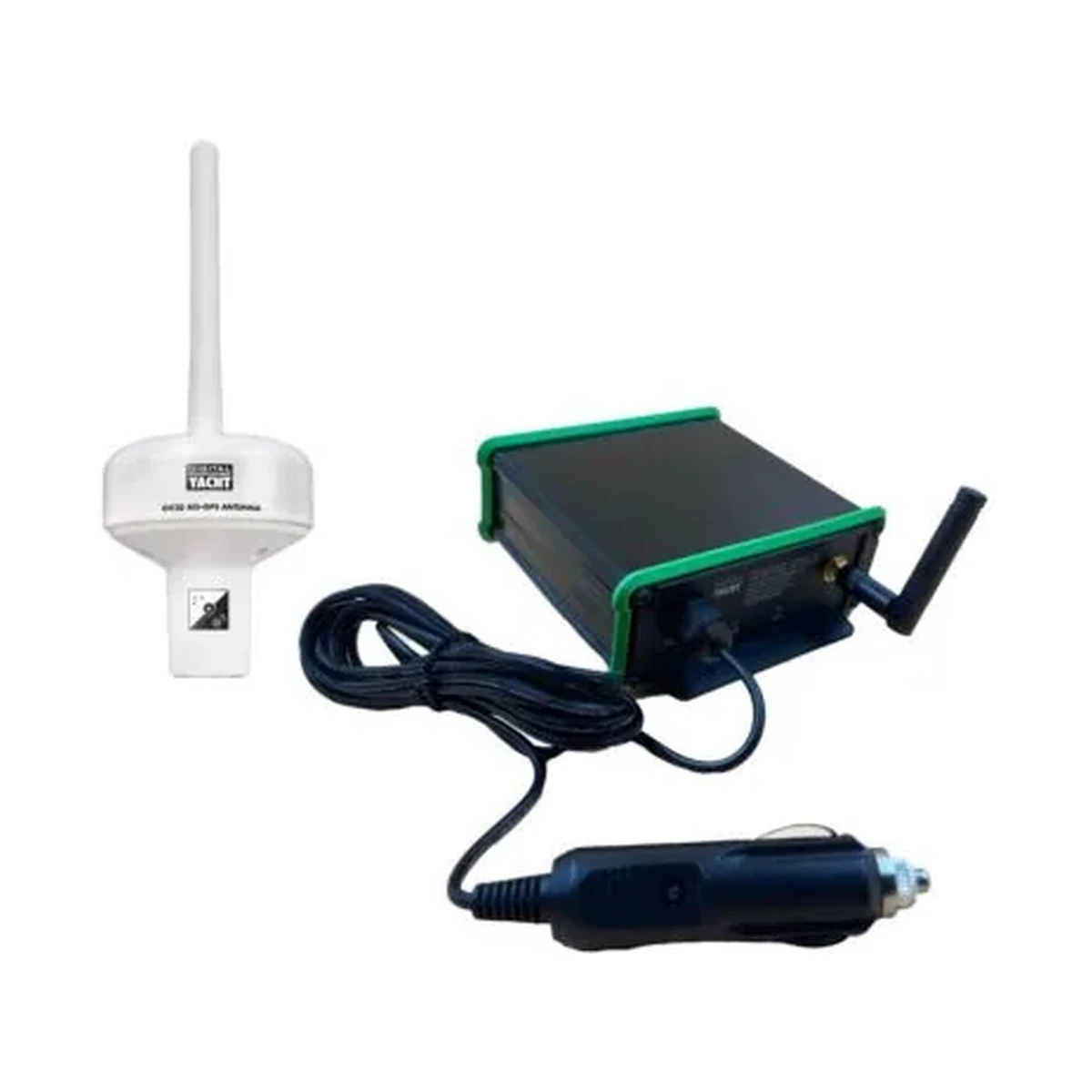
Most AIS equipment assumes a vessel with a bridge: a fused 12 or 24 volt circuit, a mast for the VHF antenna, a clear deck position for the GNSS antenna and a chartplotter to display targets on. A tender, a RIB, a survey launch or a small workboat often has none of those, and yet these are exactly the craft that benefit most from being visible, because they are small, low in the water and hard to pick up on radar.
What makes a transponder portable
Two design choices turn a conventional transponder into something a small craft can use. The first is a combined AIS and GPS antenna, so instead of two separate mast and deck fittings there is one unit on a standard one-inch threaded mount that can be clamped to a rail or an A-frame and removed at the end of the day. The second is power that does not require a permanent wiring loom, either a cigarette lighter connection to an existing socket or an internal battery.
The Digital Yacht Nomad 2 takes the first approach. It is a Class B+ 5 W SOTDMA transponder supplied with a combination AIS and GPS antenna on an industry standard one-inch threaded mount and a cigarette lighter power solution, with Wi-Fi covering a boat up to roughly 25 metres length overall and support for up to seven connected devices. Because there is no fixed display, the AIS picture arrives on a phone or tablet running navigation software over Wi-Fi, which is usually what a small craft has anyway.
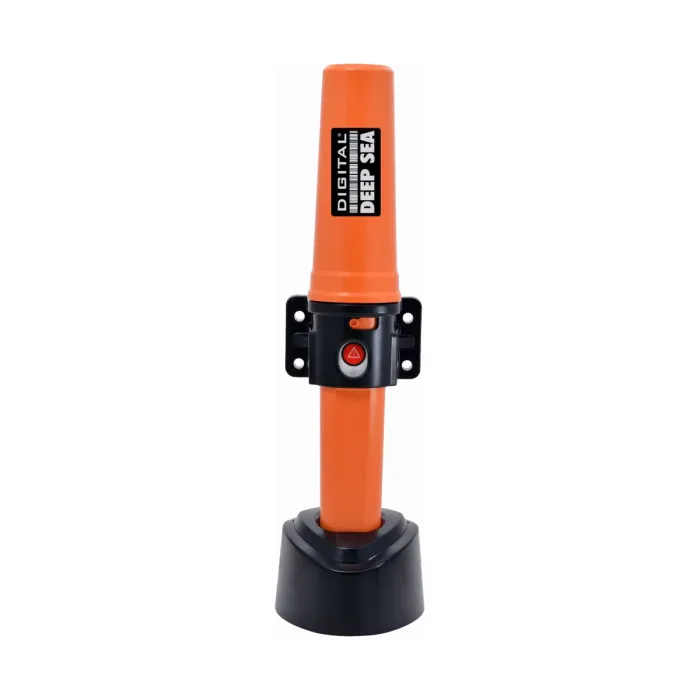
The Digital Yacht AIB1000 takes the second. It is a certified Class B transponder designed to operate independently of the boat's electrical system entirely, running from an internal battery for up to five days of continuous use, with a full recharge in around five hours. Its integrated antenna is rated IPx8, it transmits position every 30 seconds when underway and static data every three minutes, and it ships with a mounting bracket and a rapid AC charging dock. If required, it can still be wired to onboard power through an optional DC cable kit.
Transmit power and what it buys you
Class B comes in two flavours and the distinction matters more on a small craft than a large one. Class B CS transponders transmit at 2 W using carrier-sense channel access, competing for airtime with everything else in range. Class B SO, sometimes marketed as Class B+, uses SOTDMA access with a reserved transmission slot and typically 5 W of output, so reports get through more reliably in busy water and the effective range is greater.
Range on VHF is dominated by antenna height, and a tender's antenna is by definition low. That is the argument for choosing the higher-power SOTDMA option on a small craft rather than treating it as an upgrade for larger vessels: you are trying to make up for a fundamental disadvantage in antenna position.
Practical checks before buying
- Confirm the craft has, or can be issued, its own MMSI. A transponder cannot legally or usefully transmit under the mother vessel's identity, and a wrongly programmed MMSI creates a duplicate target rather than a useful one.
- Work out where the combined antenna will actually sit. A rail mount at chest height on a RIB is workable, but it must be clear of people, clear of metal structure and clear of the sky for the GNSS side.
- Check what will display the data. Portable units generally rely on Wi-Fi to a phone or tablet, which means keeping a device charged and readable in spray and sunlight.
- For battery-powered units, match the quoted runtime to the actual duty cycle. Five days of continuous operation is a different figure from five days of intermittent use with the unit switched off between trips.
- Decide whether the unit is genuinely portable between craft or semi-permanent on one. Moving a transponder between vessels means reprogramming static data every time, which is rarely worth it.
Where a portable transponder is not the answer
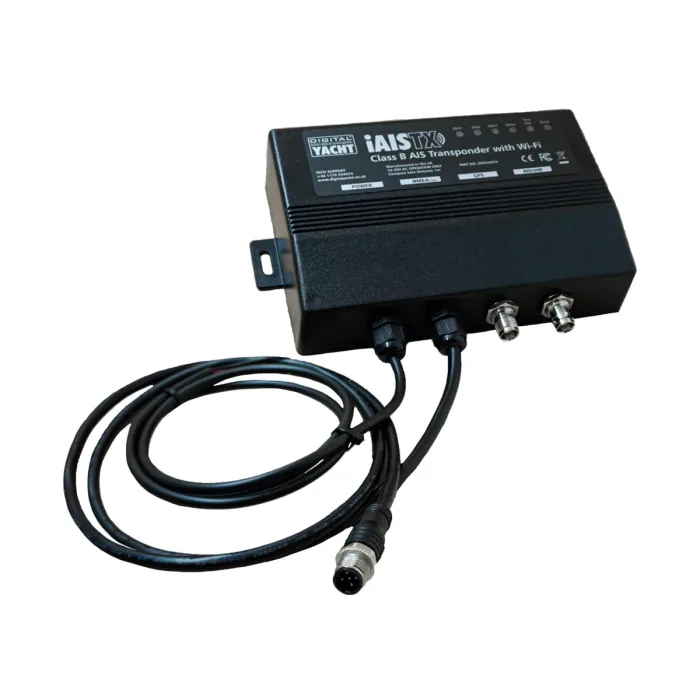
Portability is a compromise. A removable antenna will never match a mast-top installation for range, an internal battery will never match a fused ship's supply for endurance, and a phone screen will never match a dedicated display for reliability in bad weather. On any craft that has a proper electrical system and somewhere to put an antenna, a conventional fixed transponder is the better engineering answer.
The case for portable equipment is specific: vessels that genuinely cannot support a fixed install, craft that are trailered or lifted and stored ashore, and tenders operating away from a parent vessel where visibility to shipping is the whole point. Where a vessel falls into that category, a self-contained or portable transponder is not a downgrade. It is the difference between being seen and not being seen.
ASPL supplies AIS transponders and receivers across the Digital Yacht and AMEC ranges, along with the antennas, interfacing and commissioning that go with them.