
Does intrinsic safety change the analog vs digital decision?
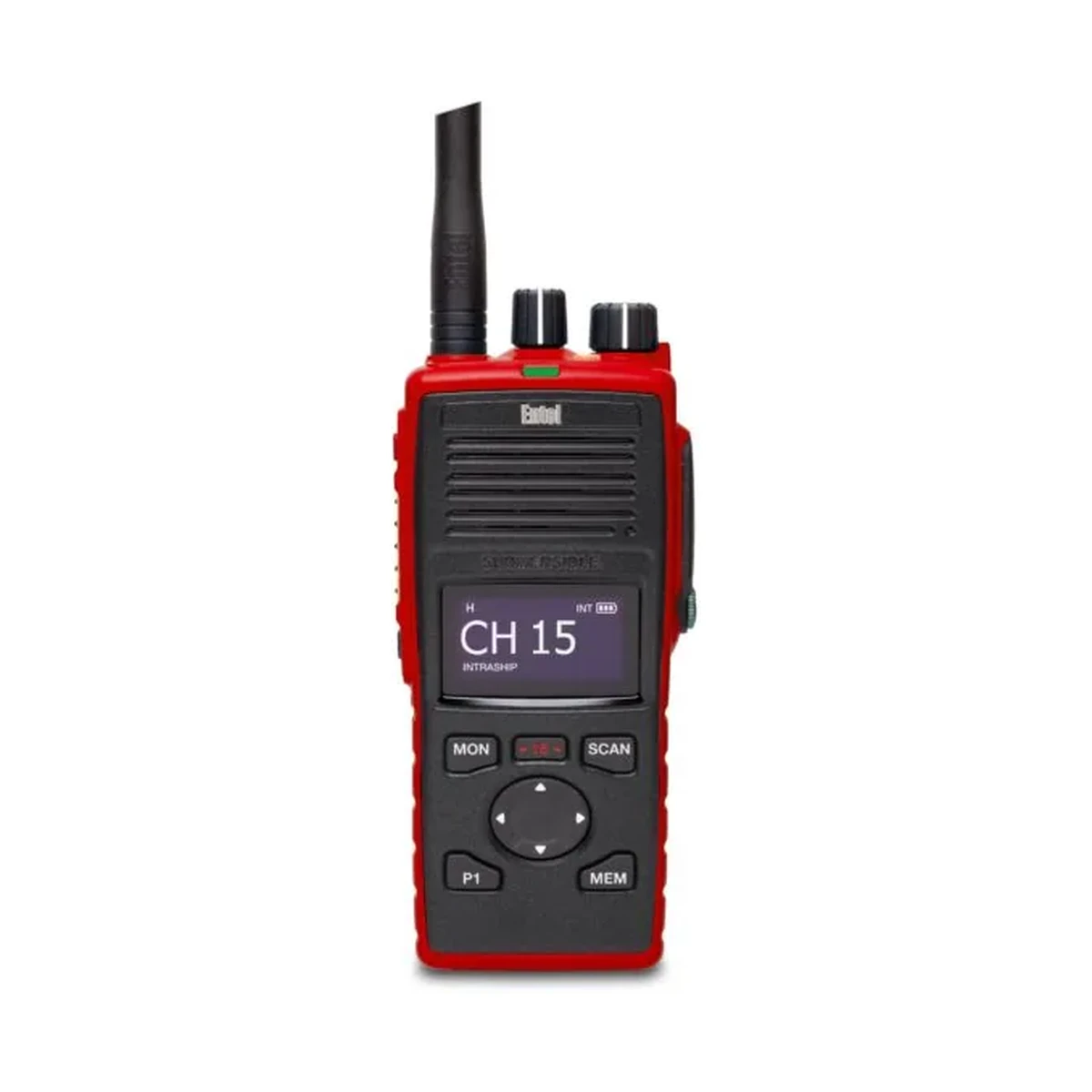
Not the trade-offs themselves, only the range of certified options. As the analog vs digital two-way radio article covers in depth, analog and digital two-way radio each have genuine strengths: analog degrades gracefully at the edge of range and remains simpler and generally lower cost, while digital holds clear audio within range, supports individually addressed calling and data messaging, and typically packs more channels into the available spectrum. None of that changes because the equipment also needs to be intrinsically safe certified. What changes is that the certified, hazardous-area-rated options within each category are a narrower subset of the full commercial range.
Which analog ATEX radios are available?
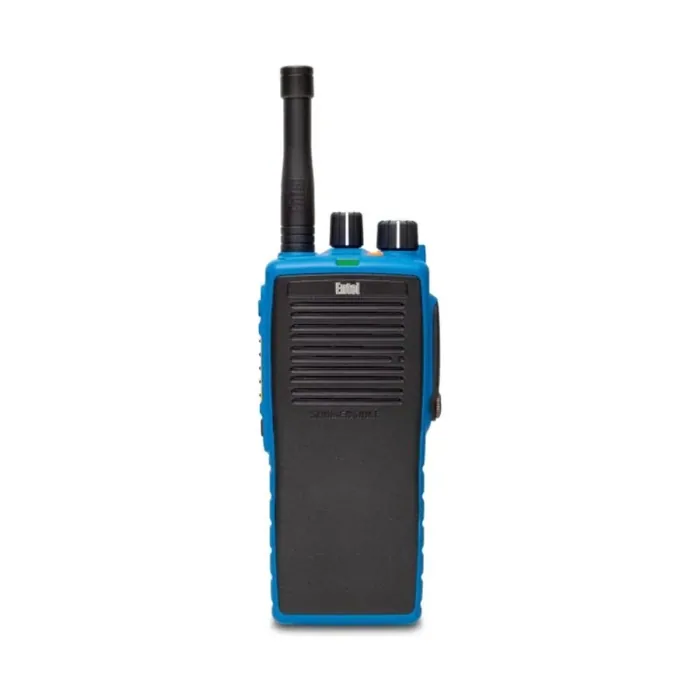
Entel's marine FF-series handhelds, such as the DT944FF and DT844FF, are analog VHF units, built around the marine channel plan and ATEX certified. Several of Entel's land mobile M-suffix and unsuffixed models are similarly analog, offering straightforward, ATEX-rated communication without digital signalling. These suit sites where the underlying communication need is simple, point-to-point or open-channel, and where digital's added capability would go unused.
Which digital ATEX radios are available?
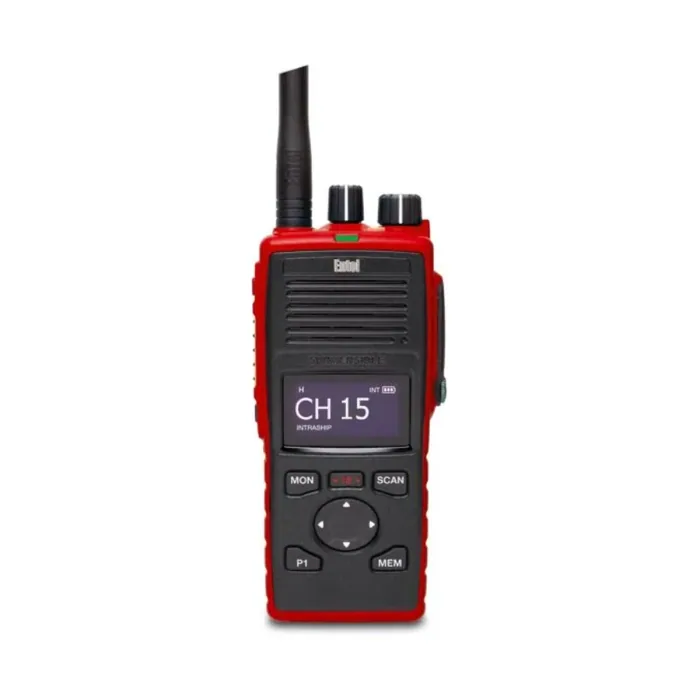
The Entel DT982M is a DMR digital handheld, ATEX certified to the higher IIC gas group, and the Icom IC-F52D-UL/IC-F62D-UL pair offers NXDN/dPMR digital capability with substantially larger channel capacity, both compared in more depth in Entel DT982M vs Icom IC-F52D-UL/IC-F62D-UL. These bring the same individually addressed calling, larger channel capacity and, where the wider system supports it, data messaging capability that digital radio offers outside hazardous-area applications.
Do all ATEX radios have lone-worker safety features?
No, it is not universal across the ATEX range. Hazardous industrial sites frequently place particular weight on lone-worker safety features, motion or stationary detection sensors that trigger an alert if a worker shows no movement for a set period, given the elevated risk profile of the environment itself. Confirm this feature against the specific unit's own feature list: it is not universal across the ATEX range, and it is not guaranteed simply because a radio is intrinsically safe certified.
Where does digital's advantage matter most?
On a large hazardous site with multiple work zones, contractors and shift patterns, digital's individually addressed calling and status messaging capability can meaningfully improve coordination and accountability in a way that matters more on a complex industrial site than on a simple single-purpose one. On a hazardous site, knowing precisely who is where, and being able to reach a specific individual or team without broadcasting to everyone, has safety value beyond operational convenience.
Analog or digital: which suits a hazardous-area fleet?
- Simple, single-purpose communication need, cost-sensitive: analog ATEX equipment such as Entel's FF-series or unsuffixed models covers this fully.
- Large, complex site with multiple teams, contractors and a genuine need for addressed calling or larger channel capacity: digital ATEX equipment such as the DT982M or the Icom UL pair is worth the added cost.
- Lone-worker safety is a specific site requirement: confirm the exact model's motion/stationary detection capability rather than assuming it from the ATEX rating alone.
- Existing digital infrastructure, DMR or NXDN, already in place on the non-hazardous parts of the site: matching the ATEX equipment's protocol to that existing infrastructure avoids running two incompatible digital systems in parallel.
ASPL is an authorised distributor of Entel and supplies Icom's ATEX range in India and can help work through the analog-versus-digital decision specifically for a hazardous-area fleet.


