
Three form factors, three roles
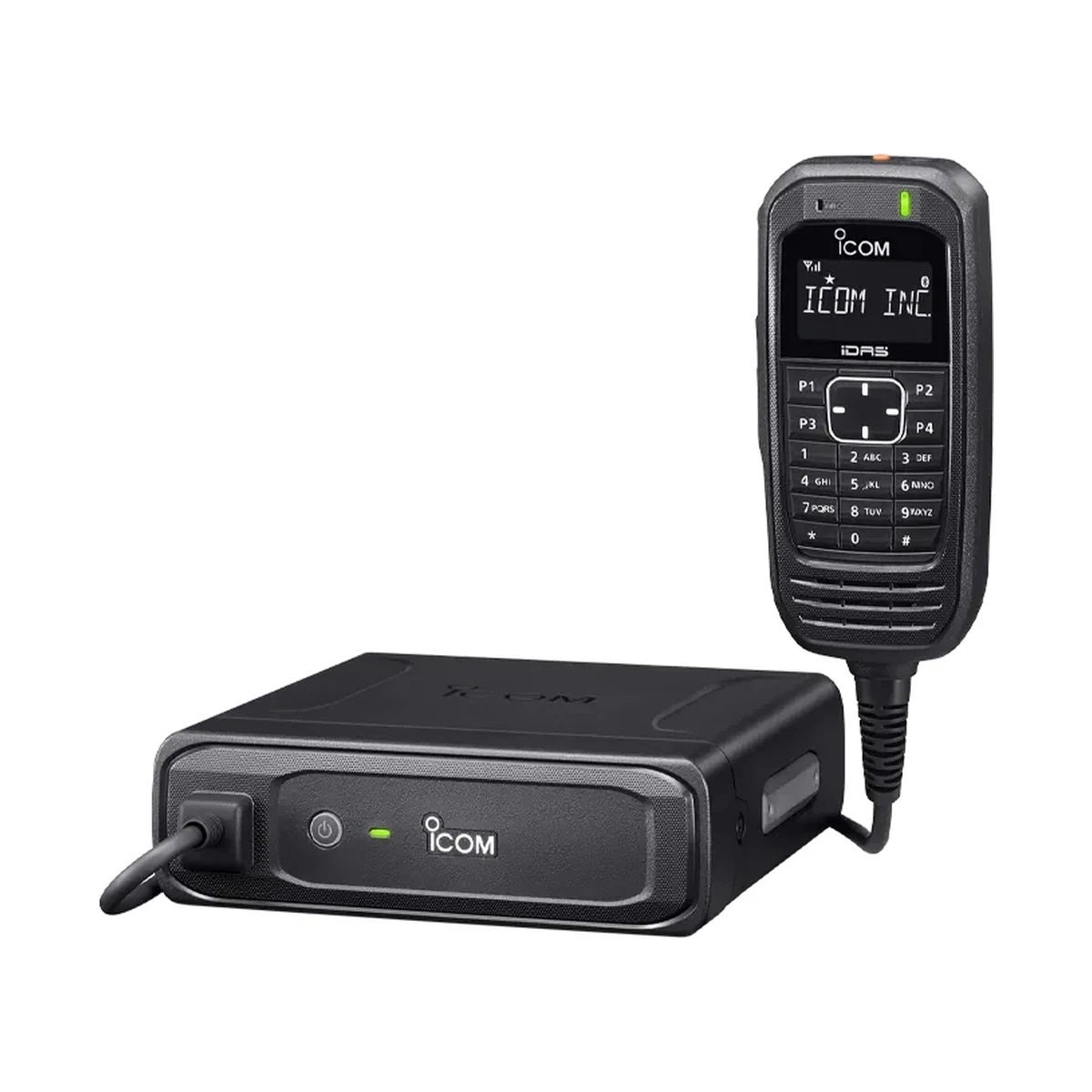
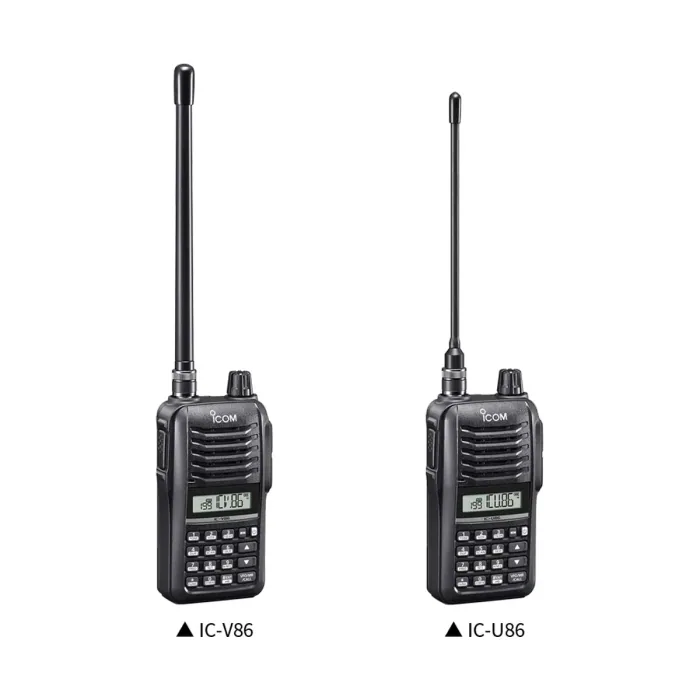
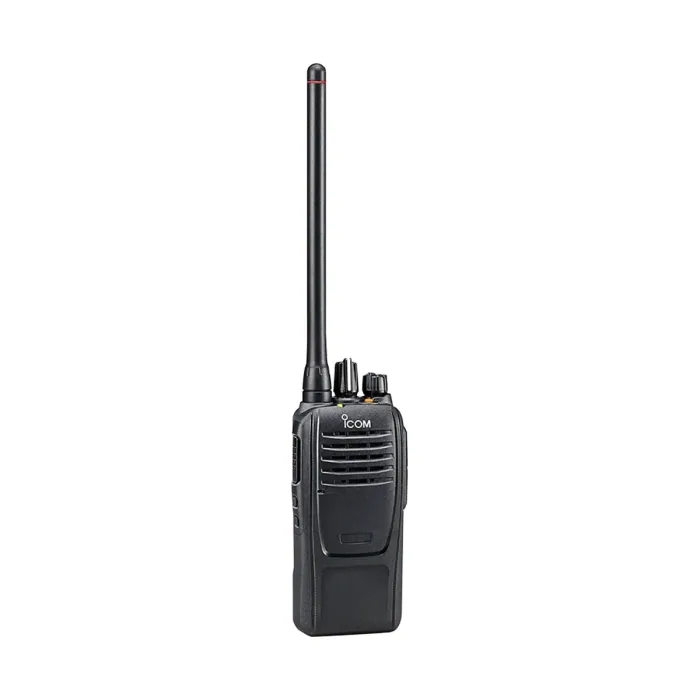
Two-way radio equipment splits naturally into three physical categories, and confusing them, or assuming one can substitute for another, is a common source of disappointing coverage. A handheld like the IC-V86 or IC-F1000 is carried by a person. A mobile radio like the IC-F5023 or IC-F5330D/IC-F6330D is permanently installed in a vehicle. A repeater like the IC-FR5000 is a fixed installation that extends the range of every handheld and mobile radio on the system.
Handhelds: portable, power-limited
A handheld radio's output power is constrained by battery size and heat dissipation in a device small enough to carry comfortably; the IC-V86 tops out at 7.0 W, and most commercial handhelds in this range sit between 4 and 7 W. That power limitation, combined with an antenna mounted low, at chest or head height on a person rather than elevated, means a handheld's direct, repeater-free range is the shortest of the three form factors, though still entirely sufficient for many single-site operations.
Mobile radios: more power, a real antenna
A vehicle-mounted mobile radio draws from the vehicle's electrical system rather than a battery, which allows substantially higher output power: the IC-F5023 delivers 25 W against a typical handheld's 5 W, and the IC-F5330D reaches 50 W on its high setting. Combined with a proper vehicle-mount antenna, generally both taller and better positioned than anything practical on a handheld, a mobile radio's direct range is considerably longer than a handheld's, which is exactly why a mobile unit in a supervisor's or dispatcher's vehicle often anchors a site's communication even before a repeater is added.
Repeaters: extending everyone's range at once
A repeater does not communicate on its own behalf; it receives a transmission on one frequency and immediately retransmits it, generally from a high, well-sited antenna, on a different frequency, extending the effective range of every handheld and mobile radio configured to use it. The IC-FR5000 and IC-FR6000 output 50 W and support both digital and analog operation from the same unit, described by Icom as two RF modules in one, while the higher-capacity IC-FR9010/IC-FR9020 reaches 110 W on VHF and 100 W on UHF for larger site coverage. A repeater turns a collection of individually limited-range handhelds into a system whose effective range is set by the repeater's antenna height and power rather than by each individual radio.
How the three layers combine in practice
A small single-building operation, a retail site or a small warehouse, may need nothing beyond a handful of handhelds talking directly to each other, with no repeater or mobile radio required at all. A site spanning a larger campus, multiple buildings or challenging terrain typically adds a repeater specifically because handheld-to-handheld range alone cannot cover the whole area. An operation with vehicles, a security patrol, a delivery fleet, a facilities team, adds mobile radios to those vehicles both for their own higher power and range and because a vehicle-mounted radio is often the most reliable link back to a repeater from the edges of a large site.
Working out what you actually need
- Small, single-building site with people communicating directly: handhelds alone are often sufficient, and adding a repeater or mobiles before confirming a genuine coverage gap is unnecessary spend.
- Large site, multiple buildings, or difficult terrain with known dead spots: a repeater is the layer that actually solves this, not higher-power handhelds.
- Vehicles in regular use as part of operations: mobile radios in those vehicles add both range and a more reliable path to any repeater in use.
- Growing operation starting small: handhelds first, with mobile radios and a repeater added as the site's actual coverage gaps become clear, is a more cost-effective sequence than over-specifying from day one.
ASPL supplies all three layers, handhelds, mobiles and repeaters, across the Icom range, and can help work out which combination your specific site actually needs rather than defaulting to the most expensive option.