
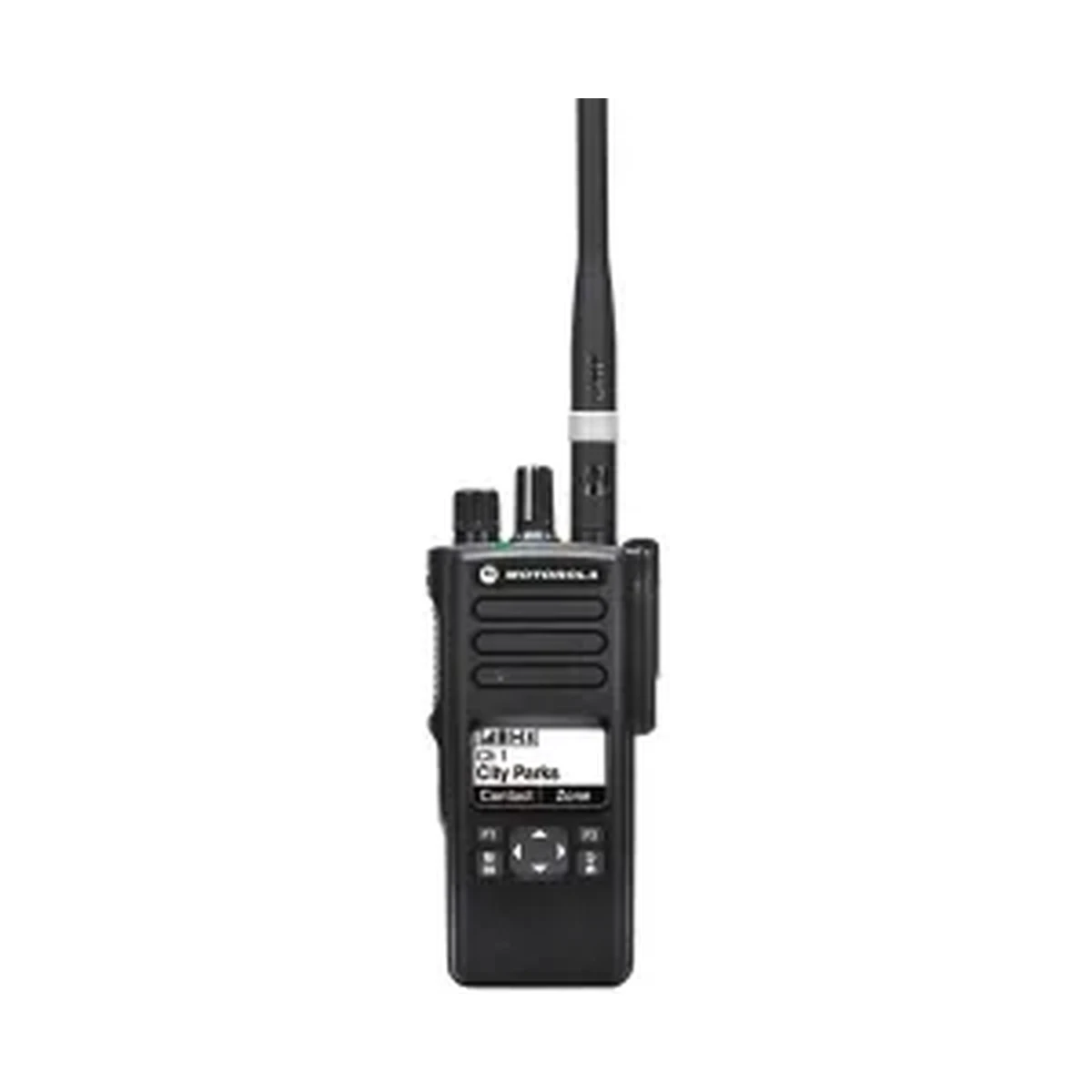
Choosing between Motorola's MOTOTRBO DMR range and Icom's NXDN digital range starts with the protocol incompatibility covered in more depth elsewhere in this series, but once that platform decision is made on the basis of existing infrastructure or a fresh start, the specific hardware within each range still has real, practical differences worth understanding.
Entry-level: MOTOTRBO R2 vs IC-F1100D
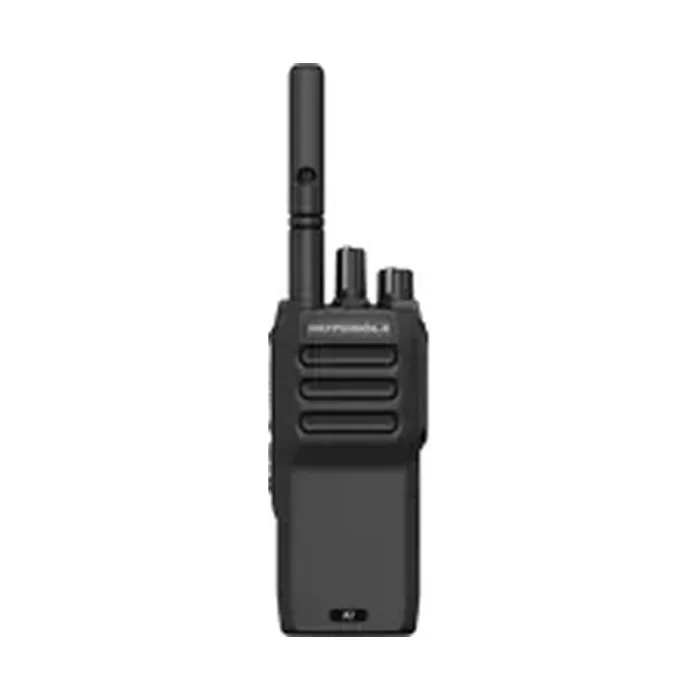
The MOTOTRBO R2 is Motorola's accessible DMR entry point: 64 channels, IP55 rated, up to 26.5 hours of digital battery life on its high-capacity pack, and a rated audio output of 1 W with 3 W maximum. The IC-F1100D/IC-F2100D pairing covers the equivalent role on Icom's NXDN side, offering both a 128-channel display version and a simpler 16-channel non-display version, giving buyers a choice the MOTOTRBO R2 does not present in the same way. Both are aimed at cost-sensitive fleets wanting digital's core benefits without paying for advanced features neither entry-level buyer typically needs.
Mid-tier: XiR P6600i vs IC-F3400D/IC-F4400D
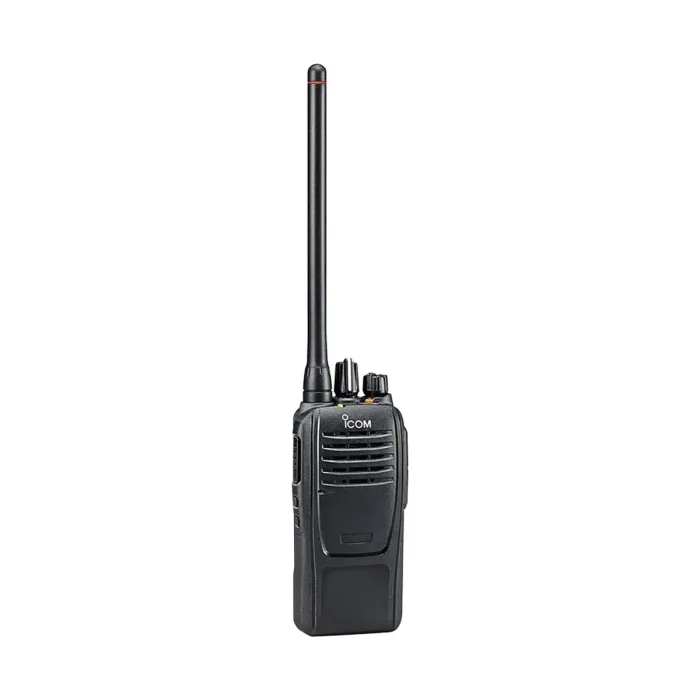
The XiR P6600i steps up to 256 channels (or 32 on its non-keypad variant) and IP67 waterproofing, with battery life extending past 28 hours on its largest pack. The IC-F3400D and IC-F4400D match and exceed that on paper, up to 4000 channels as an option and IP68 protection, alongside trunking support through NXDN Type-D. Both tiers support multi-site operation, though the specific implementation, trunking type and infrastructure requirements differ by protocol.
Flagship: XiR P8668i vs the IC-F3600D/IC-F4600D series
The XiR P8668i is Motorola's full-keypad flagship in this range, 1000-channel capacity, built-in GPS with under-10-second hot-start fix times, and Bluetooth 4.0 supporting both headset audio and Motorola's fast push-to-talk profile. The IC-F3600D/IC-F4600D series answers with higher available output power, up to 7 W on VHF in specific configurations, larger optional battery capacity at 4810 mAh, and the same IP68 rating carried across Icom's current digital handheld line. Feature emphasis differs here: Motorola's flagship leans on GPS and Bluetooth connectivity, while Icom's leans on raw power and battery endurance.
What genuinely differentiates the two ranges
- Battery life reporting: Motorola publishes separate analog and digital battery life figures for every model in this comparison, useful for fleets running mixed-mode operation and wanting to plan around the lower of the two figures.
- GPS and Bluetooth: standard on Motorola's XiR P8668i in a way not matched by an equivalent standard feature on Icom's comparable tier, though Icom's range supports GPS reporting through its own digital protocol implementation.
- Trunking approach: NXDN Type-D on Icom's side, DMR Tier III on Motorola's, both mature but architecturally different, and again tied to whichever ecosystem your infrastructure already runs.
- Ingress protection ceiling: Icom's current range reaches IP68 across more of its lineup; Motorola's flagship in this comparison is rated IP68-capable specifically, with other models in the range at IP67 or IP55 depending on tier.
The decision that actually matters
For a buyer with no existing fleet or repeater infrastructure, the hardware differences above are genuinely close enough that the decision should rest more on dealer support, spares availability and total cost of ownership in India than on any single spec sheet line. For a buyer already invested in one ecosystem, protocol compatibility with existing infrastructure will almost always outweigh any hardware advantage the other platform might offer. ASPL supplies both the Motorola DMR and Icom NXDN ranges and can talk through total cost and support considerations specific to an Indian deployment.