
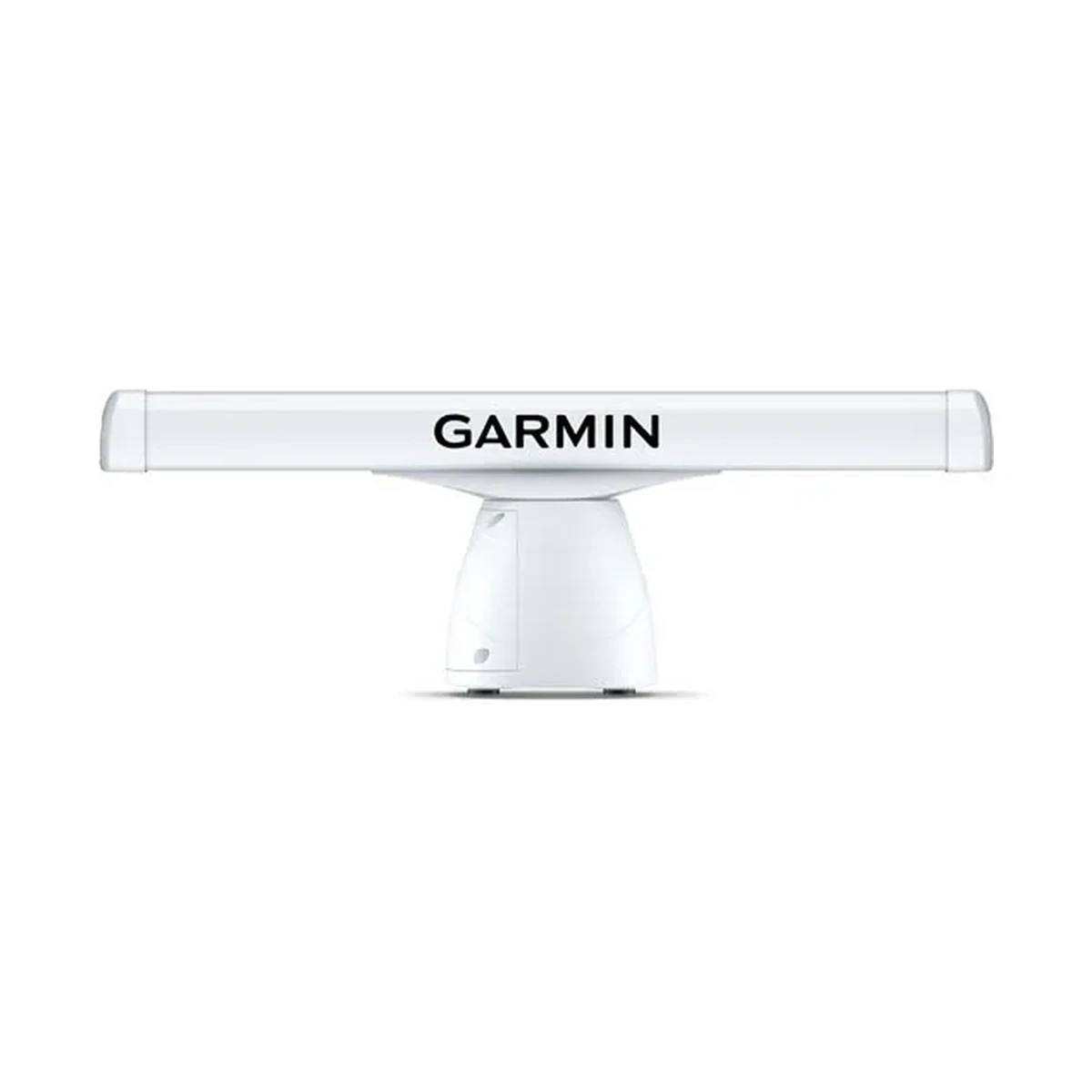
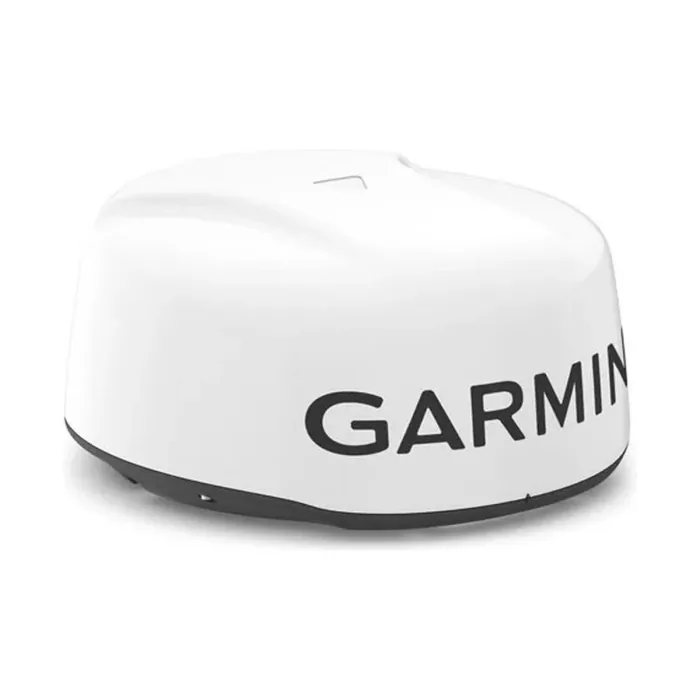
Marine radar comes in two physical forms. A radome, usually called a dome, encloses a short rotating antenna inside a fixed weatherproof shell. An open-array scanner has a longer antenna bar rotating in the open on a pedestal. Both transmit in the same X-band part of the spectrum, and the two units compared here both peak at 4 kW, so the difference between them is not transmit power. It is antenna length, and what antenna length does to the shape of the beam.
Why antenna length matters
A radar antenna concentrates its energy into a beam that is narrow horizontally and wide vertically. The vertical spread is deliberate, so the beam still illuminates targets as the vessel rolls and pitches. The horizontal width is what determines bearing discrimination: two targets closer together in bearing than the beam is wide are painted as one return. A longer antenna produces a narrower horizontal beam, and that is the whole reason open arrays exist.
The numbers make the point. The Garmin GMR 18 xHD3 Dome houses a 17 inch antenna and produces a 5.2 degree horizontal beam with a 25 degree vertical spread. The GMR 434/436 xHD3 open array uses an end-fed slotted waveguide antenna available in 4 ft and 6 ft lengths, giving 1.8 degrees and 1.1 degrees horizontally respectively against a 23 degree vertical spread. The 6 ft array is therefore roughly four to five times sharper in bearing than the dome, with antenna gain of 29 dB against 27 dB for the 4 ft version, and the pedestal quotes a bearing accuracy of 0.25 degrees. In a crowded anchorage or a channel with moored craft along both banks, that is the difference between a usable picture and a smear.
Range, rotation and refresh
The dome covers 20 m to 48 nm and spins at up to 60 rpm depending on settings. The open array covers 20 m to 72 nm and rotates at 24 or 48 rpm. Maximum rated range is an equipment specification rather than a promise of what you will see, because radar is essentially a line-of-sight service and practical detection range for a surface target is limited by the radar horizon, which grows with the height of the scanner above the water.
Rotation speed sets how often the picture refreshes. Faster rotation updates target positions more often, which helps when closing at speed or manoeuvring in traffic. Slower rotation puts more pulses onto each target per sweep, which helps detection at long range. Hence the choice of 24 or 48 rpm on the open array.
What the open array costs you in installation
- Weight and structure. The dome weighs 7.0 kg in a 20 by 9.8 inch housing. The open-array pedestal alone weighs 24.1 kg, with a further 5.5 kg for the 4 ft antenna or 7.7 kg for the 6 ft one, and the mast or platform has to carry that plus a rated maximum wind load of 80 knots.
- Swept area. A rotating 4 ft or 6 ft bar needs clearance all round and cannot be mounted where crew work or move.
- Weather rating. The dome is IPX7, the open array IEC 60529 IPX6, and the open array is rated to operate from minus 25 to 55 degrees C.
- Power. The dome draws 15 W on standby and around 40 W transmitting in normal mode; the open array draws 18 W standby and around 55 W transmitting. Both run on 11 to 32 Vdc.
- Safety distances. The open-array documentation quotes a compass safe distance of 90 cm from a standard compass and 80 cm from standby steering and emergency compasses, plus minimum safe operating distances for radiation exposure. These have to be respected at the planning stage, not discovered afterwards.
Features that come from the display, not the scanner
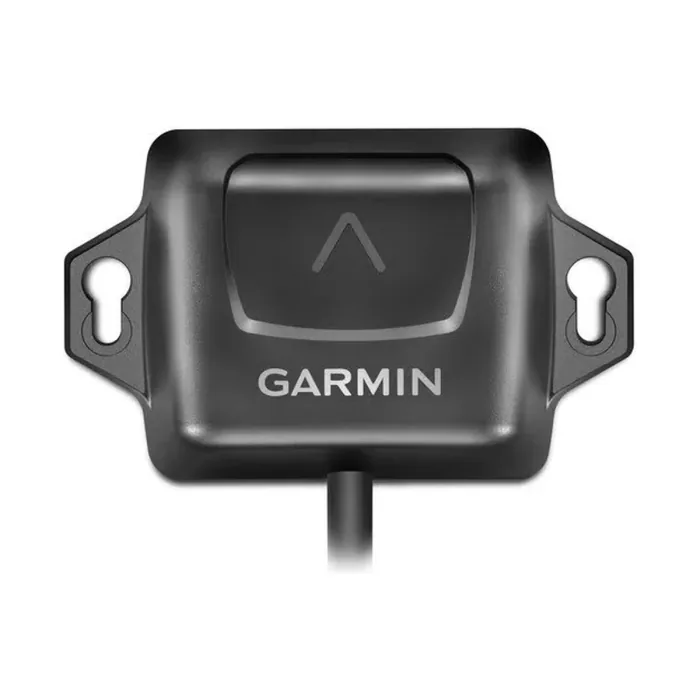
Both units offer dual range operation, radar overlay on the chart, dual radar support, automatic bird and dynamic gain, true echo trails, target sizing, scan averaging and MARPA target tracking. MARPA, the mini automatic radar plotting aid, computes the course and speed of tracked targets and their closest point of approach, and it depends on a stable heading input, so it requires a separate heading sensor such as the Garmin SteadyCast Heading Sensor or the 9-Axis Heading Sensor. A radar bought without one will not give you target tracking, and that is a common omission on a first radar fit.
The scanner also needs a display to draw on. Both of these connect over the Garmin Marine Network to a compatible multi-function display such as the GPSMAP 923xsv or the larger GPSMAP 1223xsv, and the open-array pedestal ships with 15 m power and network cables, which sets a practical limit on how far the scanner can sit from the helm without extension.
Which one
A dome is the right answer on most vessels below the size where a mast can carry a pedestal. It is light, self-contained, cheaper to fit, has no exposed moving parts, and gives a serviceable picture for collision avoidance and coastal navigation. An open array earns its weight and cost where bearing discrimination genuinely matters: dense traffic, narrow waters, or targets that have to be separated and tracked at range. If the requirement is to see other vessels and a shoreline in poor visibility, the dome does that. If it is to tell two vessels apart at three miles, it does not.