
Where small commercial vessels sit
SOLAS Chapter V, Regulation 19 sets the international carriage requirement for AIS: all ships of 300 gross tonnage and upwards engaged on international voyages, cargo ships of 500 gross tonnage and upwards not engaged on international voyages, and all passenger ships irrespective of size. That last clause catches a great many small vessels that would otherwise assume they were below the threshold.
Everything else, the workboats, trawlers, tenders, survey craft and pilot boats, generally falls outside the SOLAS mandate but may still be caught by national or port state requirements, by charterer or insurer conditions, or by the terms of a government scheme. The practical position for most small commercial operators is that AIS is either required by someone other than SOLAS, or is fitted voluntarily because operating without it in busy coastal traffic is an unnecessary risk. Confirm your own carriage obligation with the flag administration and the ports you work, because it is not something a general article can settle for your vessel.
Class A or Class B
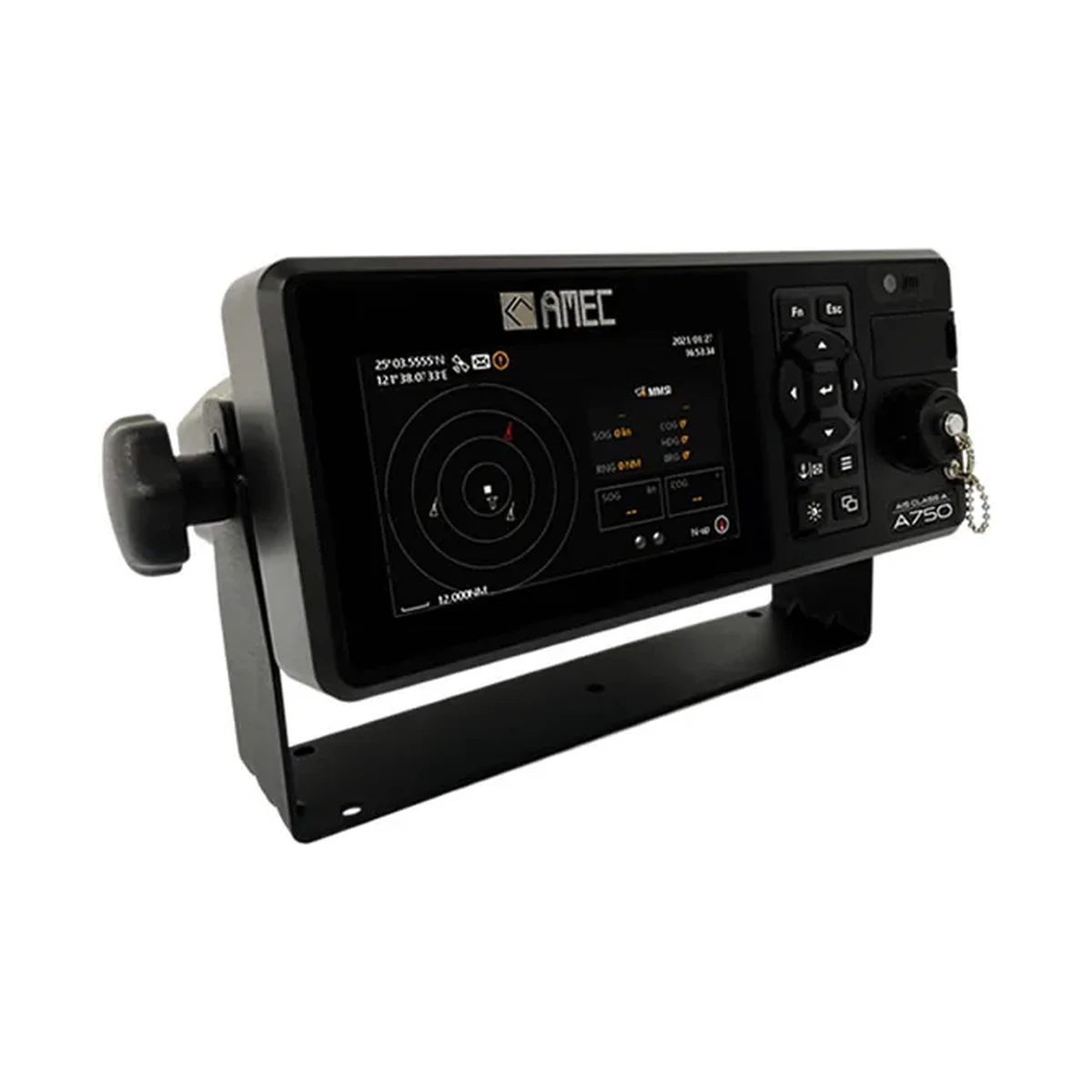
Class A is the higher power, higher reporting rate standard mandated for SOLAS vessels. It transmits at 12.5 W, reports position far more frequently, and is built and type approved against IEC 61993-2. If your vessel is subject to a mandatory carriage requirement, Class A is normally what is meant. The AMEC A750 is a current generation Class A and Inland AIS transponder certified to IEC 61993-2 Ed. 3.0 and the associated IEC 61162 and IEC 62923 standards, with a 4.3 inch sunlight readable display and an IPx6 rated enclosure.
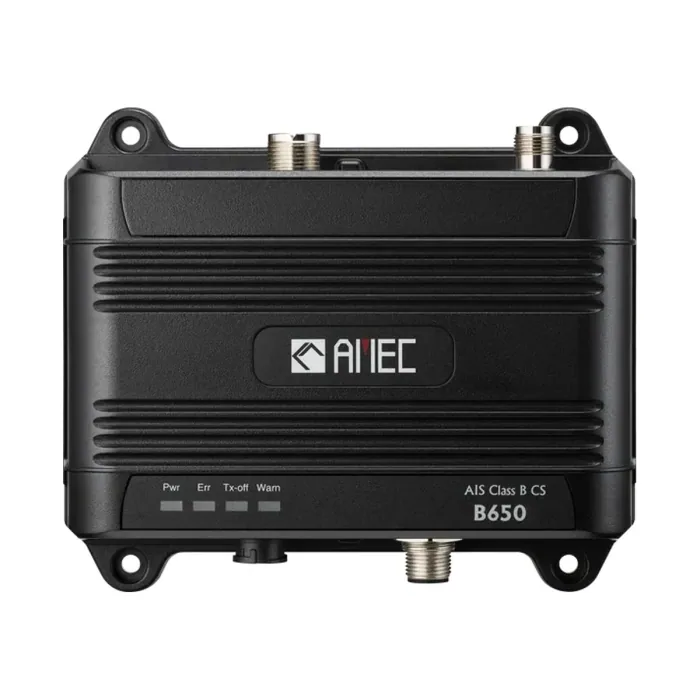
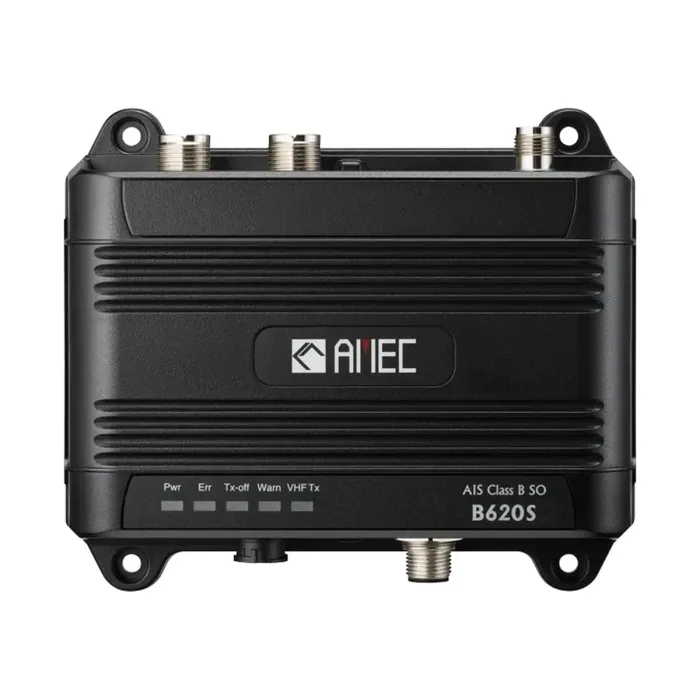
Class B is the lower power standard for vessels under no mandatory carriage requirement. Within Class B there is a meaningful split. Class B CS units use carrier sense channel access and transmit at 2 W, as on the AMEC B620S. Class B SO units use SOTDMA, the same self organising slot allocation Class A uses, which gives more reliable slot access in congested waters, and transmit at 5 W, as on the AMEC WideLink B650 and the Digital Yacht AIT6000 and iAISTX Plus. On a working vessel that operates in crowded approaches, the SO variant is generally the better choice.
The checklist
- Confirm the carriage requirement that actually applies to your vessel with the flag administration and the ports you operate into, rather than assuming SOLAS thresholds are the whole picture.
- Choose the correct class. Class A where carriage is mandated, Class B SO for congested working waters, Class B CS where cost and power draw dominate.
- Verify type approval. The unit should carry current certification against the applicable IEC standard, IEC 61993-2 for Class A, IEC 62287-1 or 62287-2 for Class B, and IEC 60945 for the marine environment generally.
- Obtain the MMSI and the station licence before the unit goes into service. In India the radio licence is a Maritime Mobile Station Licence from the regional licensing offices of the WPC Wing, applied for through the Saral Sanchar portal.
- Programme static data correctly: MMSI, vessel name, call sign, vessel type, length, beam and the GNSS antenna offsets. On most Class B units the MMSI locks after first entry.
- Fit the antennas properly. The VHF antenna needs height and clear line of sight; the GNSS antenna needs an unobstructed view of the sky. A splitter lets the transponder share the existing VHF antenna, or fit a dedicated AIS antenna.
- Power the unit from a dedicated, adequately fused circuit rather than sharing with other electronics, since a transponder draws current on every transmit burst.
- Interface the output to the vessel's primary navigation display over NMEA 0183 or NMEA 2000, and confirm targets actually plot rather than assuming the wiring is enough.
- Verify transmission after commissioning. Confirm your own vessel is being received by another AIS unit, not just that your display shows other traffic.
- Consider the associated safety equipment while you are at it: an AIS SART such as the AMEC Plomo 500 for survival craft, and AIS man overboard beacons such as the AMEC TB520 for crew.
- Keep the unit powered and transmitting while under way. An AIS switched off to reduce clutter is a compliance failure and an operational one.
What tends to fail an inspection
In practice the equipment is rarely the problem. The recurring findings are administrative or installation related: static data left at factory defaults or carried over from a previous owner, antenna offsets never measured, a GNSS antenna mounted under a hardtop where it struggles for a fix, a transponder wired into a shared circuit that browns out under load, and a unit that receives perfectly but has never been confirmed to transmit.
Support
ASPL supplies GMDSS, AIS transponders, AIS SARTs and marine VHF meeting carriage requirements, fits and commissions them, and provides operator training for bridge crew, with a nationwide collection network behind the equipment for repair and warranty work.